
Nikro Air Duct Cleaning in Waco: A Homeowner’s Guide
When a technician opens your supply register and you can see dust billowing into the room during cleaning, the equipment being used has no containment. A Nikro negative-air system reverses that pressure so contaminants travel toward the machine, not your living room. That single mechanical difference is what separates a professional duct cleaning from a vacuum hose waved around your vents. If you’ve been comparing quotes for air duct cleaning and wondering why one company mentions Nikro and another just says “we have strong suction,” here’s what the equipment actually does.
If reading this makes you want a straight answer on your own home rather than a general guide, call (855) 745-6206. Estimates are free.
What Does Nikro Equipment Actually Do During a Duct Cleaning?
Nikro units work by negative air pressure. The machine connects to your duct system, pulls a large volume of air through it, and exhausts that air through a HEPA filter while keeping the system under vacuum. When the ductwork is under negative pressure, every open register pulls air inward. Dust that gets disturbed by a brush or an air whip has one direction to travel: toward the machine.
Compare that to a setup with no containment. A vacuum sits in one room while technicians open registers elsewhere. Air rushes in at those openings, which is fine, but disturbed debris in the branch lines can also drift back into living space because the pressure relationship isn’t controlled. You’ve probably seen a version of this: dust settling on furniture after a “cleaning” that was supposed to remove it.
Nikro machines are built for this specific job rather than adapted from general construction equipment. They hold a pressure differential across the whole run of ductwork, not just at the point where the hose connects. That’s the part that matters. Brush speed loosens debris. Negative pressure determines where the debris goes.
- Containment first: the system stays under vacuum while registers are open
- Directional airflow: contaminants move toward the HEPA filter, not into rooms
- Continuous operation: the machine runs through the whole cleaning, not just at the end
Why HEPA Filtration Specificity Matters More Than Suction Power
HEPA filtration captures particles at 0.3 microns with high efficiency, which is the size range where the most troublesome airborne material lives. Pet dander, mold spores, fine dust, and the particles that ride along with them all cluster in that band. A machine that pulls air but exhausts it through a coarse filter doesn’t remove those particles. It relocates them, sometimes into the same room where the machine is running.
This is where the equipment conversation gets practical for Waco households with asthma or allergy sufferers. If someone in the house reacts to airborne dust, the cleaning itself can trigger symptoms if the exhaust isn’t filtered properly. A Nikro system with a maintained HEPA filter keeps the exhaust stream clean, which means the cleaning improves air quality instead of temporarily worsening it.
Filter maintenance is the part nobody asks about and everybody should. A loaded HEPA filter stops capturing particles and starts restricting airflow, which drops the pressure differential the whole process depends on. We’ve found that asking how often a company services its filters tells you more about their operation than any brochure claim about being thorough.
How Nikro Equipment Works Alongside Rotobrush Agitation
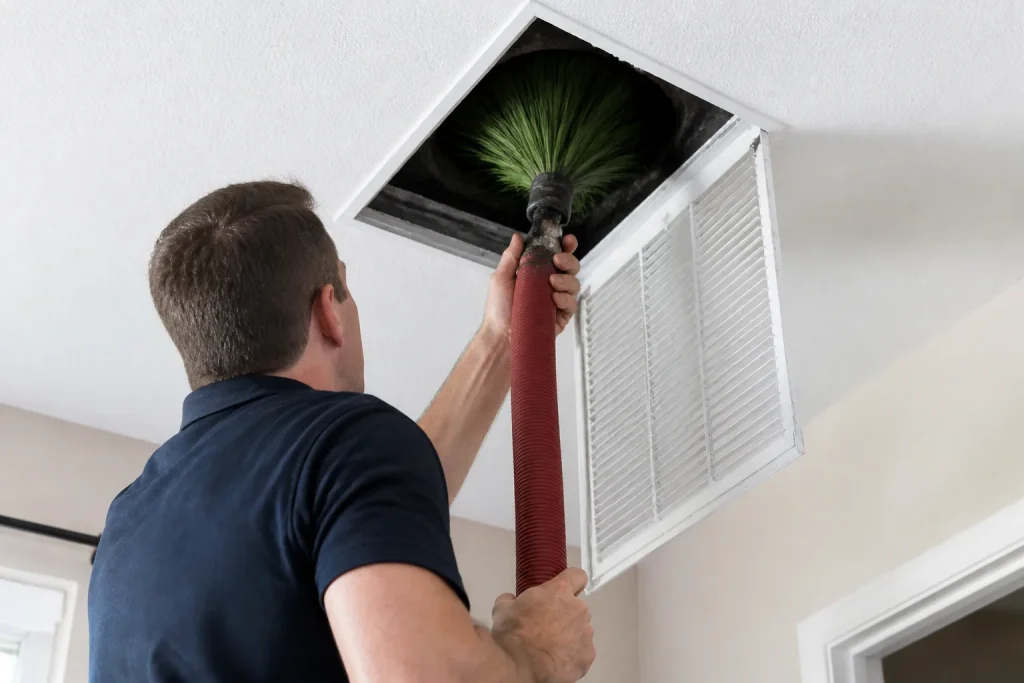
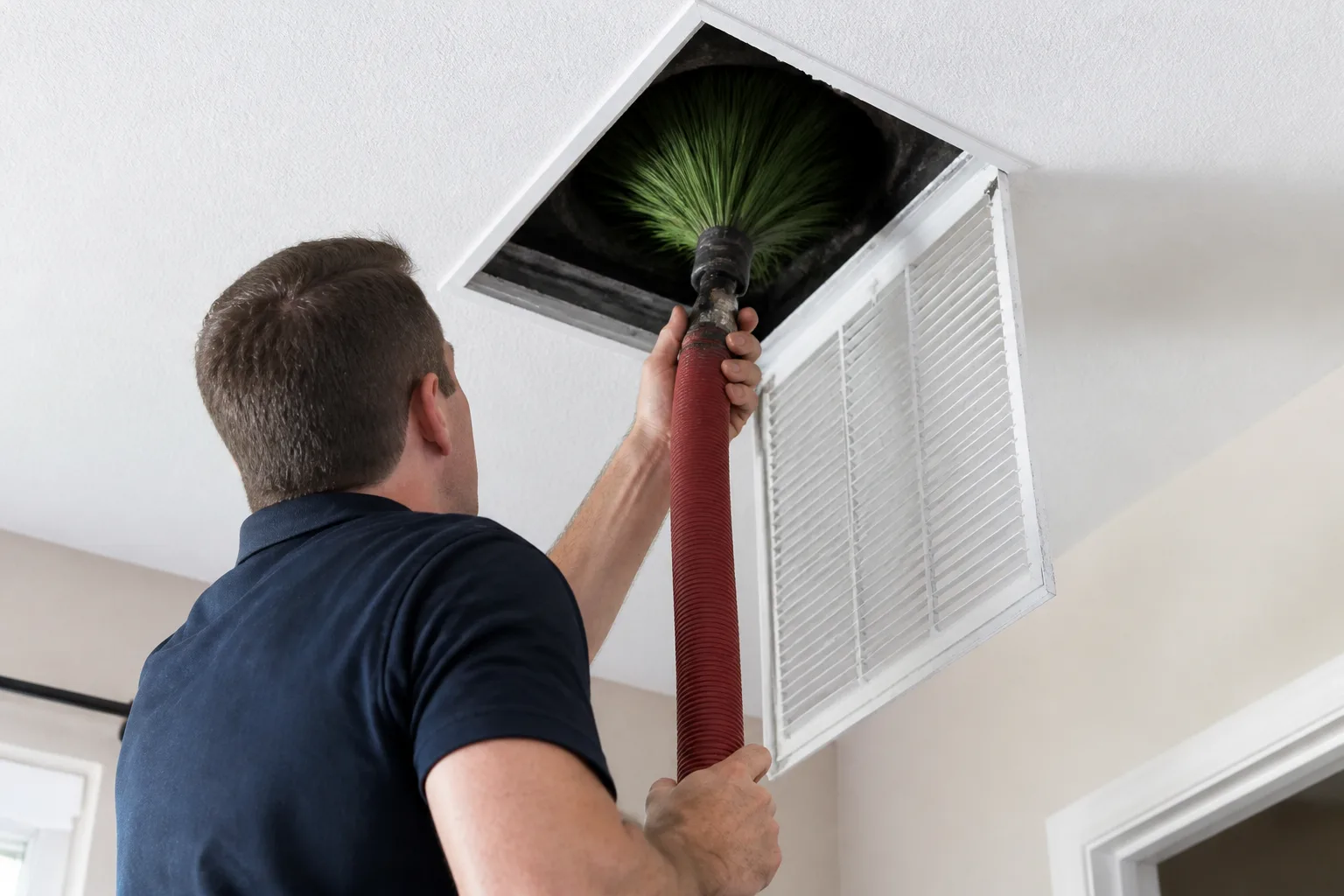
These two tools do different jobs and work best together. Rotobrush is a rotary brush-and-vacuum system. The brush physically contacts duct walls, loosening the layer of dust and debris that has bonded to the surface over time. Suction alone doesn’t move that material. It has to be agitated first.
Nikro equipment handles the containment and the collection. Run the brush through a branch line to break debris loose, then let the negative-air system pull it back to the HEPA unit. The sequence matters: agitate to liberate, contain to capture. Skip the first step and the duct stays dirty. Skip the second and you’ve just moved dirt into the room.
Standalone use cases exist too. A Nikro system alone can handle light maintenance cleaning or a system that’s already fairly clean. On a heavily soiled system, or one with flex duct that holds debris in its ridges, combining agitation with containment gets a better result. We explain which approach fits a home before work starts, and the price is agreed as one flat figure per system, not per vent.
Flex Duct vs. Sheet Metal: How Duct Material Changes the Approach
Much of the housing around Waco built from the 1980s through the 2000s uses flex duct in at least part of the system, often in attic runs where sheet metal would be harder to install. Flex duct is a corrugated plastic sleeve with a wire coil inside. Those ridges trap debris, and aggressive brushing can damage the liner. The cleaning has to be firm enough to move material and gentle enough to leave the liner intact.
Sheet metal duct behaves differently. It’s smooth, so debris bonds in a thinner layer but releases more cleanly once agitated. The seams and joints are where problems hide, and those are also where negative pressure shows its value: air moving past a loose seam under vacuum pulls debris back into the system rather than pushing it out into the attic or a wall cavity.
Nikro negative-air equipment adapts to both because the vacuum is applied to the system as a whole. The machine doesn’t care which duct material it’s connected to. What changes is the agitation method and the amount of time spent per run, and that’s a judgment call made on site after looking at the actual ductwork.
What to Ask Any Company Claiming to Use Nikro Equipment
Anyone can put a brand name in an ad. Here’s how to confirm the equipment is real and properly maintained before you book.
- Ask for the CFM rating of the unit they’ll bring. CFM is cubic feet per minute, the measure of how much air the machine moves. A unit that’s undersized for your home’s duct system won’t hold negative pressure across the whole run. The answer should be specific, not “it’s plenty powerful.”
- Ask how the HEPA filters are maintained. A company that services its equipment can tell you the schedule. Vague answers here are a warning sign.
- Ask whether the system runs under negative pressure the whole time registers are open. This is the core of containment, and it’s a yes-or-no answer.
- Ask what happens to the exhaust air. It should pass through HEPA filtration before it returns to your home.
- Ask for before-and-after photos of your own ducts. Anyone can show stock photos. Photos of the actual work are proof the job happened.
We’re happy to answer all five. Our technicians have up to 13 years of experience, and we’d rather walk a homeowner through the equipment than have them wonder later whether the job was done right.
Where the Other Equipment Fits In
Nikro is the centerpiece of a containment conversation, but it isn’t the only professional-grade platform worth recognizing. Abatement Technologies builds air-filtration and contaminant-removal equipment used in remediation work, and seeing that gear on a job signals a company that thinks past surface dust. Rotobrush covers the agitation side.
On the system side, we regularly work with homes running Honeywell and Aprilaire components. Knowing how those systems are put together matters because registers, dampers, and returns all affect how air moves through ductwork during cleaning. A company that doesn’t recognize the equipment in your mechanical closet is guessing.
Our work covers three services: duct cleaning in Waco, duct repair when we find structural damage, and dryer vent cleaning, which is a fire-safety service rather than a comfort upgrade. Lint buildup in a dryer vent is a documented fire hazard, and clearing it is one of the few home maintenance jobs with a direct safety outcome.
When to Call a Pro Instead of Waiting
Some signs mean it’s time for a professional look rather than another filter change. Visible dust streaking out of registers shortly after cleaning the room. A musty smell that returns whenever the system runs. Unexplained allergy symptoms that ease when the HVAC is off. Visible debris or a disconnected joint inside a duct run found during a renovation.
If you’d rather not climb into an attic to inspect flex duct yourself, that’s a reasonable call. Call (855) 745-6206. We answer 24/7. Fast dispatch from 7am to 7pm, Sunday through Friday.
Related services in Waco: air duct cleaning and dryer vent cleaning.
The Bottom Line
Nikro equipment isn’t a name to drop for credibility. It’s a negative-air machine with HEPA filtration that changes what a cleaning can accomplish, because it determines where disturbed contaminants travel. Combined with Rotobrush agitation, it handles both the bonded debris on duct walls and the airborne material that has to be captured rather than relocated. For a Waco home with flex duct, sheet metal, or a mix of both, the equipment and the technique have to match the ductwork in front of the technician, not a script.
If you’re in Waco and want a straight answer about your own ducts, Duct Cleaning Waco offers free estimates. We’ll show you what the equipment does, agree one flat price per system before work begins, and share before-and-after photos of your ducts when we’re done. Call (855) 745-6206.
Frequently Asked Questions
Nikro air duct cleaning uses negative-air machines with HEPA filtration to pull contaminants out of ductwork while keeping the system under vacuum. The machine creates pressure that draws disturbed debris toward the filter instead of into your rooms. It’s typically paired with a rotary brush system that loosens bonded debris from duct walls first.
Yes, and the difference is where the dust ends up. Without controlled negative pressure, debris disturbed during cleaning can drift back into living space. With it, every open register pulls air inward and the exhaust passes through HEPA filtration, so what comes out of the system is filtered air rather than relocated dust.
Most whole-system cleanings fall in a typical range rather than a single price, because home size, duct layout, and how soiled the system is all change the work involved. We quote one flat price per system after looking at the ductwork, never per vent, and the written estimate sets the final price. Call (855) 745-6206 for an exact quote. Estimates are free.
Usually because the equipment and the time aren’t there. A low quote often means a shop vacuum or a machine without proper HEPA containment, fewer registers actually cleaned, and no before-and-after photos of your ducts. Ask what machine they’ll bring, what its CFM rating is, and how the filters are maintained. Call (855) 745-6206 if you’d like those answers from us.
Written by the team at Duct Cleaning Waco.
Need Air Duct Cleaning Help?
Call Duct Cleaning Waco - licensed & insured, with free written estimates in Waco.
(855) 745-6206