
Last updated November 15, 2026
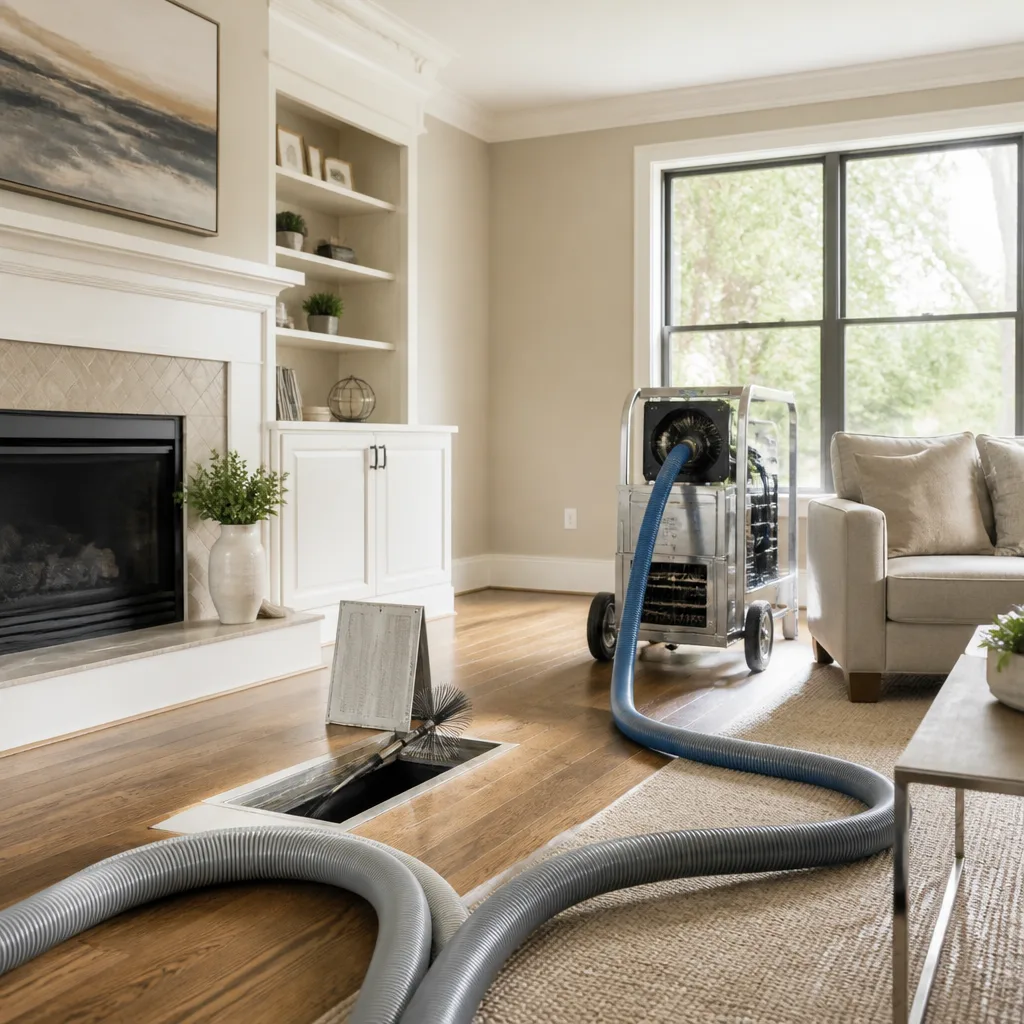 Whole-home duct cleaning
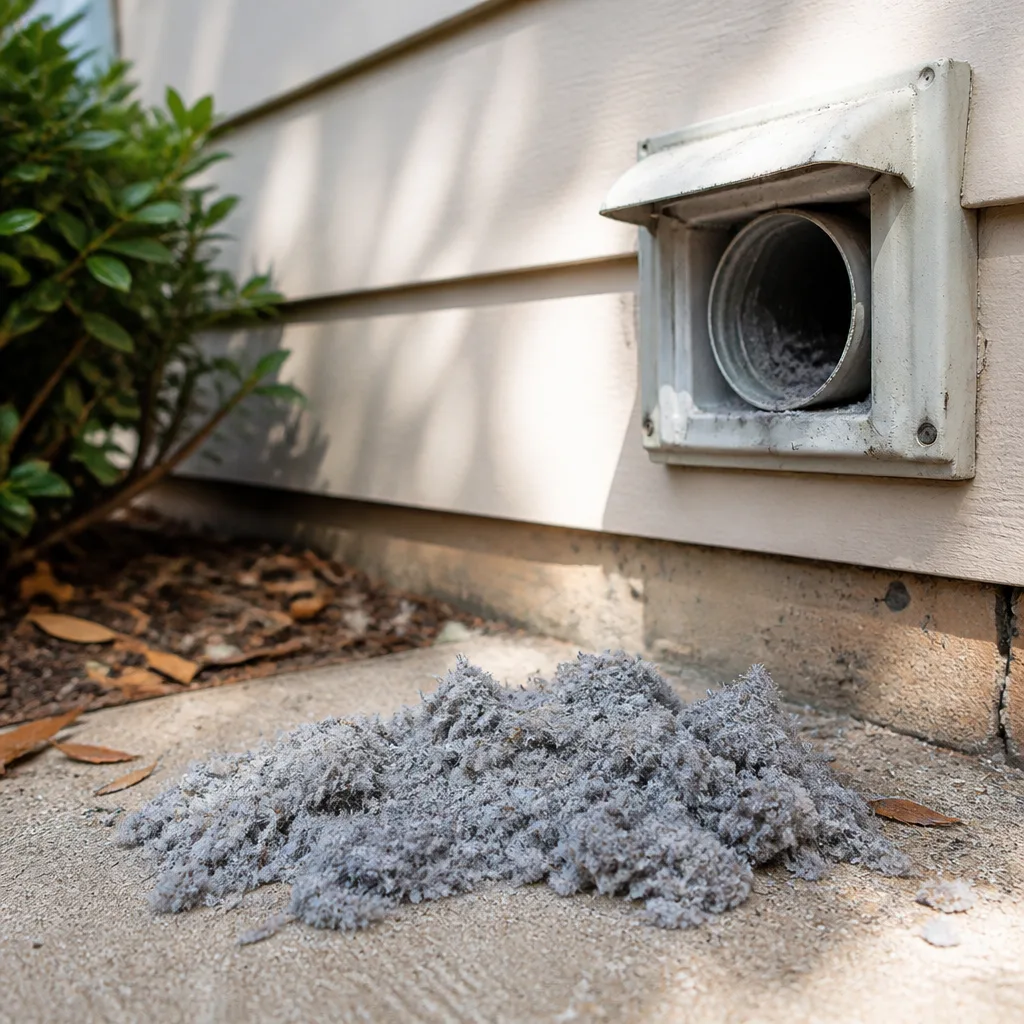 Dryer vent cleaning
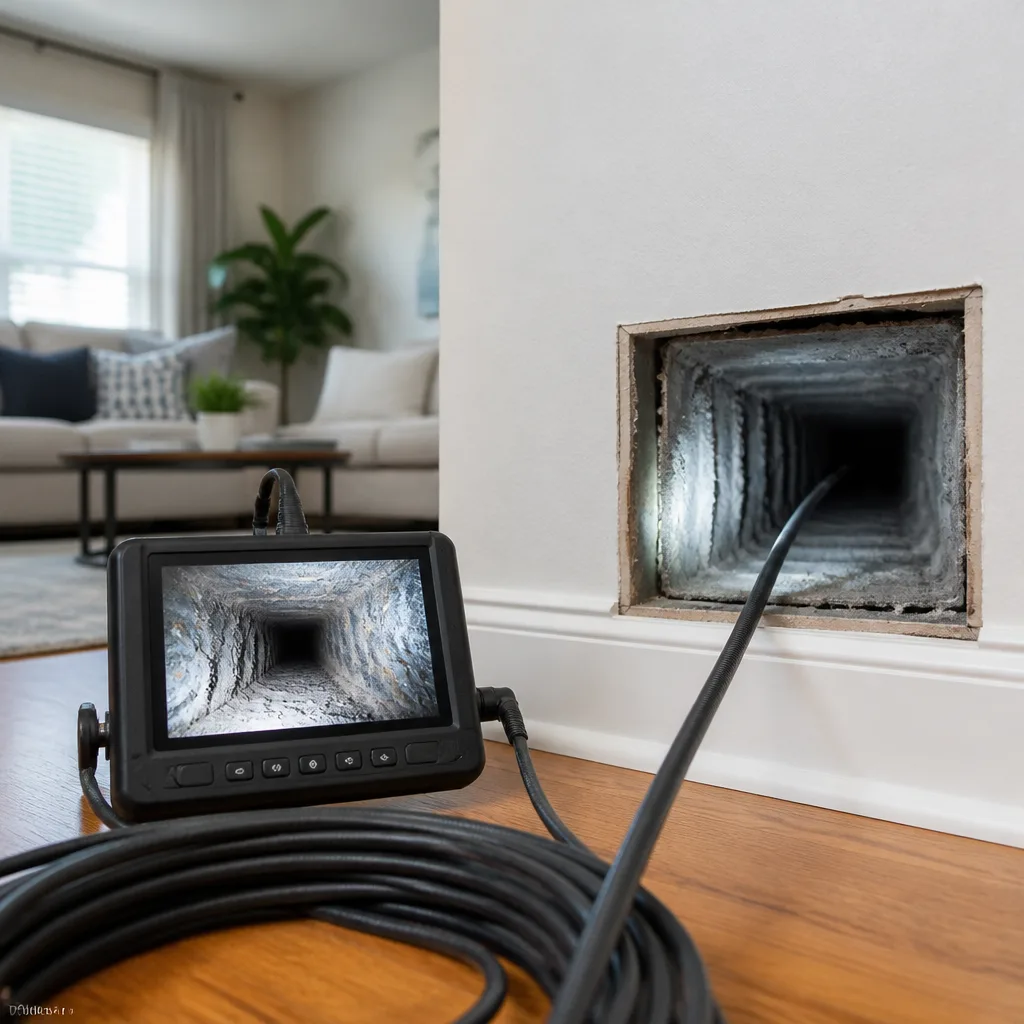 Camera inspection
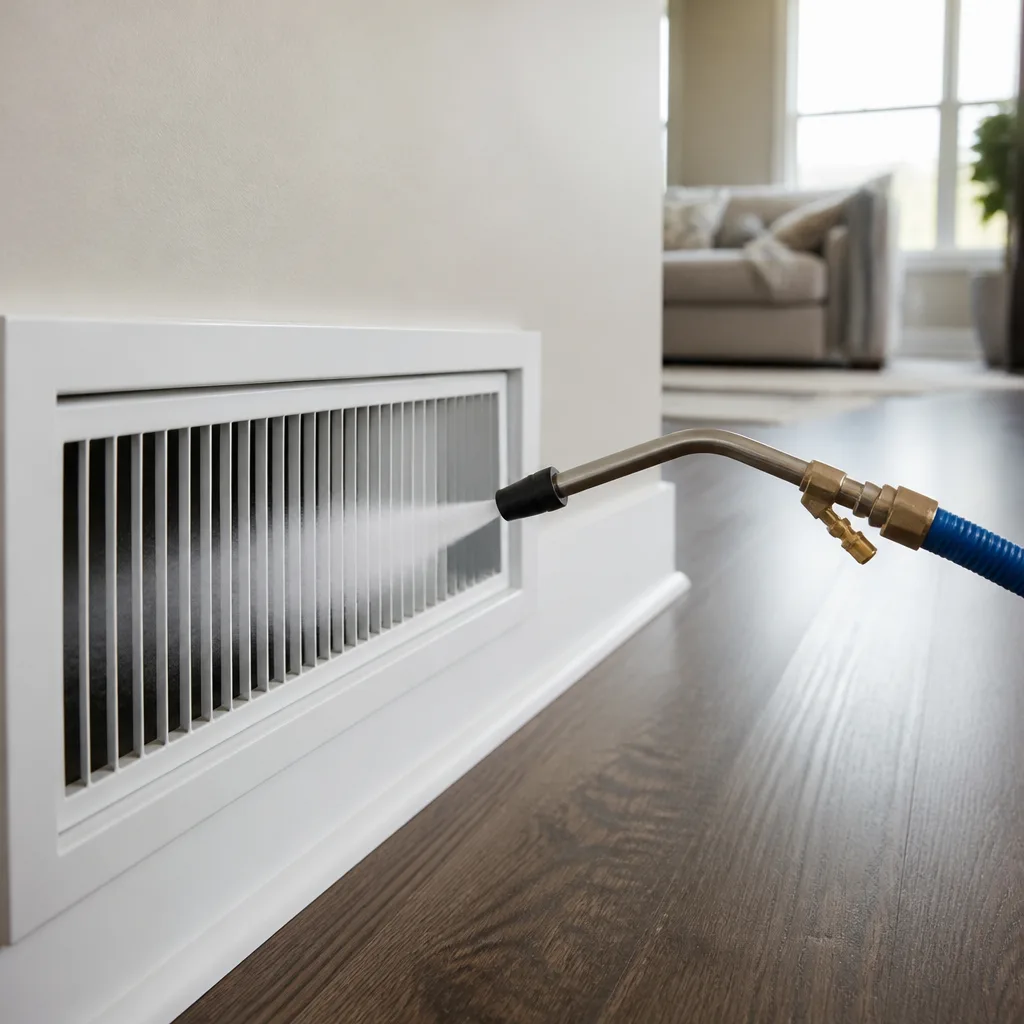 Sanitizing & deodorizing
Whole-system duct and dryer vent check with before-and-after photos - you see exactly what came out of your vents
That "$99 whole-house special" is a bait ad - the real number appears once they are in your hallway, or the "clean" is a shop-vac at the register. We photograph the inside of your ducts before and after instead.
Air Duct Cleaning Permits, Codes & Inspections in Waco, TX: What You Need to Know
Most homeowners assume a duct cleaning is maintenance, no different from clearing a slow drain. No permit, no inspector, no paperwork. That assumption holds right up until a home inspector flags unpermitted duct modifications during a sale and the deal stalls over a piece of the system nobody thought twice about. The line between cleaning and repairing is where the permits live, and it’s a line a lot of Waco homeowners don’t know exists. This guide walks through what Texas mechanical code actually requires, how the City of Waco handles HVAC permits, why attic duct sealing can cross into permitted work, and what proof you should keep even when no permit applies.
Quick Answer
Air duct cleaning by itself does not require a permit in Texas or in Waco. Duct repair, replacement, or any work that changes the mechanical system’s configuration can require a mechanical permit from the City of Waco’s development services department, and that work must be done by a licensed HVAC contractor. If you’re unsure which side of the line a job sits on, ask before work starts, not after.
Styles & brands we work with
- Whole-home duct cleaning
- Dryer vent cleaning
- Camera inspection
- Sanitizing & deodorizing
Table of Contents
- Cleaning vs. Repair: Where the Permit Line Sits
- How the City of Waco Handles HVAC Mechanical Permits
- Why Attic Duct Sealing Can Trigger a Permit
- Texas Licensing: Repair Contractors vs. Cleaning-Only Companies
- What to Document Even When No Permit Is Required
- What a Duct Inspection Actually Looks For
- How Unpermitted Duct Work Surfaces at Resale
- Why Waco’s Climate Shapes Duct Repair Needs
Cleaning vs. Repair: Where the Permit Line Sits
The rule of thumb is simple: cleaning removes what’s already there, repair changes the system. Cleaning doesn’t alter the ducts, the equipment, or how air moves through the house. It restores the interior of the ductwork to a cleaner state without modifying anything. That’s why it’s treated as maintenance, not construction.
Repair is different. When a technician cuts into a duct run, replaces a section of flex duct, reconfigures a junction, or seals a joint that changes how the system is put together, that’s modification of a mechanical system. Texas follows the International Mechanical Code as its base, and that code treats duct systems as part of the mechanical system. Modification means a permit.
Here’s how that breaks down in practice:
- No permit typically needed: source removal cleaning of ducts, registers, and grilles; dryer vent cleaning; visual inspection; cleaning of the air handler cabinet exterior.
- Permit often required: replacing a section of damaged duct, adding a new supply or return, moving a register to a new location, reworking a plenum connection, changing duct sizing.
- Ask before assuming: duct sealing in an attic, reconnecting a disconnected duct, sealing with mastic or metal tape across a joint that’s failed, replacing a flexible connector at the air handler.
The gray zone is real, and it’s where most of the confusion lives. A technician climbing into a Waco attic to clean ducts who finds a disconnected run and reconnects it has now crossed from cleaning into repair. Whether that reconnect needs a permit depends on scope. A simple reconnection of an existing joint is usually treated as repair-level maintenance. Reworking the joint or replacing the duct section typically isn’t. The answer isn’t universal, and that’s exactly why you should ask.
If you’ve never had your system checked, our air duct cleaning service starts with inspection, because the cleaning and the repair conversation usually happen in the same visit. The technician should tell you what they’ve found and let you decide how to proceed.
How the City of Waco Handles HVAC Mechanical Permits
HVAC mechanical permits in Waco go through the City of Waco’s development services department, which handles permits, plan review, and inspections for residential and commercial construction within the city limits. The process is straightforward but strict on paperwork. A contractor has to be set up to pull the permit before any work begins.
What a contractor needs to pull a mechanical permit in Waco:
- A state HVAC contractor license in good standing. Texas requires the license, and the city verifies it.
- An active registration with the city as a contractor authorized to do mechanical work. This is separate from the state license.
- A permit application describing the scope of the work: what’s being repaired, replaced, or added, and where. “Duct repair” alone won’t pass review; the application has to be specific.
- The permit fee paid upfront. Fees vary by job scope and are set by the city’s fee schedule.
- Any required submittals. Minor duct repair usually doesn’t require full plans, but larger reconfiguration work may trigger plan review.
After the permit is issued, work happens in sequence. Most duct-related mechanical permits require at least one inspection: rough-in before the work is closed up, and sometimes a final inspection once the system is running. The inspector looks for code compliance on duct material, connections, sealing, and support. If the work fails inspection, the contractor comes back to correct it, and the process repeats until it passes.
The critical thing to understand: if a contractor can’t or won’t pull a permit, that’s a signal. Either the work doesn’t need one, or the contractor isn’t set up to pull one. Both are worth asking about directly. “Do we need a permit for this?” is a legitimate question, and a professional will answer it without flinching. If you’re looking at the Waco climate and wondering whether your ducts are the reason your energy bill looks the way it does, our Waco service page covers what a full-system cleaning typically involves.
Why Attic Duct Sealing Can Trigger a Permit
This is the one that trips up homeowners most often, so it deserves its own section. Duct sealing sounds like maintenance. It’s often not.
Sealing with mastic or metal tape is a repair action. When a technician climbs into a Waco attic and seals a leaking joint with mastic or UL-listed foil tape, they’re changing the sealed assembly of the duct system. In many jurisdictions, that’s a mechanical modification that falls under permit review. The scope matters: sealing a small gap on an accessible joint may be treated as maintenance. Sealing a full run, reworking a plenum connection, or sealing an attic that has visible disconnected sections can be interpreted as repair requiring a permit.
Why is the attic such a hot spot in Waco? Because the attic is where the ducts run, and it’s where they take the most punishment. Between the summer heat and the humidity swings, attic duct systems in older Waco neighborhoods face conditions that work joints and connections loose over time. Disconnected flex duct is common, and the “repair” that gets it reconnected is exactly the kind of work that can need a permit depending on how it’s done.
What to know about attic duct sealing:
- Sealing an existing joint: usually maintenance-level. Still worth documenting.
- Reconnecting a disconnected duct: depends on scope. A simple reconnection typically doesn’t require a permit; reworking the joint does.
- Replacing a duct section: typically permit-required, and typically requires a licensed HVAC contractor.
- Sealing the plenum at the air handler: often reviewed as mechanical work; ask the contractor.
None of this is a reason to avoid sealing your attic ducts. Leaky attic ducts move conditioned air into the attic, which is one of the most common ways a home loses efficiency. It’s a reason to have the conversation about scope before the work starts, not after the invoice arrives. If your system involves major brands like Honeywell or Aprilaire controls and equipment, the sealing work needs to integrate cleanly with what’s already there, and that integration is where scope questions become worth asking.
Texas Licensing: Repair Contractors vs. Cleaning-Only Companies
Texas regulates HVAC work through the Texas Department of Licensing and Regulation. The core line is this: HVAC repair requires a licensed contractor. Cleaning, in the narrow sense of removing contaminants from the ducts without changing anything, doesn’t require an HVAC license.
What that means practically:
- A cleaning-only company can clean ducts, registers, and dryer vents without holding an HVAC contractor license. That’s legitimate as long as the work stays cleaning.
- Any company doing duct repair, including reconnecting runs, replacing sections, or sealing joints as part of a system modification, must be operating under a Texas HVAC contractor license.
- The license belongs to the contractor, and the technician doing the work has to be supervised by or acting as a licensed contractor. The license isn’t a sticker on a van; it’s a credential tied to the company.
This is where the duct cleaning industry’s reputation problem comes from. A company operates without an HVAC license and takes on duct repair work it isn’t licensed for. The homeowner doesn’t know the difference until later. When the work surfaces at resale, the paper trail doesn’t exist, and the homeowner is the one holding the bag.
The question to ask any duct company before they start:
- “Are you a licensed HVAC contractor, or are you doing cleaning only?” Either answer is fine as long as the scope matches the license.
- “If you find duct damage during cleaning, who does the repair?” The company doing the repair needs the license.
- “Do you pull permits when the work requires them?” A licensed contractor will pull permits when they apply.
- “Will you put your license number on the invoice?” It should be there.
The line matters to homeowners because duct repair work done by an unlicensed company isn’t just a code problem. It’s a material problem, a system performance problem, and occasionally a safety problem. If a run gets reconnected badly or a duct section is improperly supported, the air balance changes, and the system runs longer, harder, and less comfortably than it should. You can read more about how our Duct Cleaning Waco service approach separates cleaning from repair on the homepage. Dryer vent work is separate again: dryer vent cleaning is a lint-removal and fire-safety service, not HVAC repair, and it doesn’t fall under HVAC licensing the same way.
What to Document Even When No Permit Is Required
Here’s the part most homeowners skip. Even when no permit applies, you want a record of what was cleaned and what was found. That record is what protects you at resale, at an insurance claim, or in the middle of a home inspection. A verbal “we cleaned it, looked fine” is worth nothing five years later.
What to keep on file after a duct cleaning:
- A written invoice that describes the scope: system size, number of registers and returns cleaned, whether dryer vent was included, and any add-ons (santizing, filtration).
- Before-and-after photos. A professional company takes these as a matter of course. Photos of the interior of the ductwork before cleaning and after cleaning tell you whether the work was done, and they tell a buyer the work was done.
- A written note on any defects found. If the technician noticed a disconnected run, a collapsed flex section, or a joint that was clearly leaking air, that should be documented even if no repair was performed that day. You want it in writing so a future contractor isn’t starting from scratch.
- The equipment used. Professional-grade equipment is a real signal. Our technicians use Rotobrush rotary brush-and-vacuum systems, Nikro equipment on the cleaning side, and Abatement Technologies air-filtration gear for contaminant removal. The tools matter because the wrong tool leaves the debris and moves dust into occupied space.
- Any warranty or satisfaction guarantee in writing. If the company stands behind the work, that should be on paper.
One more item worth keeping: any note about whether the work was a cleaning-only job or whether it touched repair. If a technician reconnects a duct during cleaning, that’s documentation worth having. It doesn’t require a permit, but it does merit a line on the invoice. “Reconnected supply run at register 4” is more useful than “cleaned system.”
What a Duct Inspection Actually Looks For
Duct inspections get conflated with cleaning. They’re separate. A cleaning cleans. An inspection evaluates. A permit inspection is different again: it checks whether permitted work complied with code.
Three kinds of duct inspection in Waco:
- Pre-cleaning inspection. An HVAC technician or duct company puts a camera through the ducts and looks for damage, contamination levels, disconnected runs, and signs of pest or moisture intrusion. This is what informs whether the job is cleaning-only or cleaning-plus-repair.
- Permit inspection. The City of Waco’s inspectors review permitted mechanical work, typically at rough-in and final stages. They check duct material, connections, sealing, support, and clearance to combustibles.
- Real estate inspection. A home inspector during a sale looks at the HVAC system broadly, including visible ductwork. They’re not running cameras through every run, but they flag what they can see: disconnected ducts, damaged flex, evidence of unpermitted modifications, and duct systems that look like they’ve been changed without documentation.
What each one looks for in a Waco home:
- Disconnected or poorly connected duct runs, especially at the plenum and at flex-to-trunk transitions.
- Duct material defects: torn flex, crushed sections, ducts pulled tight around corners.
- Support spacing that doesn’t match code requirements.
- Sealing at joints and at the air handler.
- Evidence of moisture intrusion or condensation on duct surfaces.
- Clearance between ducts and heat-generating components.
- Duct routing that doesn’t make sense for the system size (a sign of unplanned modification).
If your system runs Honeywell or Aprilaire controls and equipment, an inspection should also verify that the ductwork is matched to the system’s static pressure requirements. A duct system that was sized for the original equipment but has since had a component changed can run poorly even when the ducts are clean. Our technicians have up to 13 years of experience and can tell you whether an inspection is likely to find anything, based on what they see when they arrive.
The most important thing to understand about inspections: they’re not adversarial. They’re documentation. A clean inspection report is a resale asset.
How Unpermitted Duct Work Surfaces at Resale
The scenario repeats often enough to be worth describing plainly. A homeowner is selling, a buyer’s inspector goes through the attic, and something in the duct system doesn’t look right. Maybe there’s a new flex run spliced into an older metal trunk with no visible supporting documentation. Maybe the plenum has been reworked and the workmanship doesn’t look factory-original. Maybe the inspector notes “evidence of recent HVAC modification” and asks for documentation.
What happens next depends on whether the paperwork exists. If a permit was pulled and the work was inspected, the homeowner can show the permit record. If a licensed contractor did the work and the invoice documents it, the homeowner can show that too. If there’s nothing in writing and the work looks unpermitted, the buyer asks for a credit or a repair. That’s the part that shocks homeowners: the real cost of unpermitted duct work usually shows up not as a fine but as a negotiating chip at closing.
Waco’s older housing stock makes this more likely than in newer builds. Neighborhoods across the city that were built decades ago have had multiple generations of HVAC work done, and not every previous contractor pulled a permit for every modification. Some of the ductwork in those homes is a patchwork. That patchwork is fine if it functions, but it needs documentation to survive a real estate transaction.
What to have ready before you list a home in Waco:
- A recent duct cleaning invoice with photos. It shows the system has been maintained.
- The most recent permit records if any mechanical work was done at any point after you bought the home.
- A written service history from the contractor who most recently worked on the ducts.
- Documentation of any repair work, including the scope description and the license number of the contractor.
If you don’t have those documents, the cheapest fix isn’t retro-permitting every prior modification. It’s getting a current cleaning, an inspection, and documentation of what’s there now. A clean, documented system is generally acceptable. An undocumented and apparently altered system is where deals stall.
Why Waco’s Climate Shapes Duct Repair Needs
Waco sits in a part of Texas with real summer heat and real humidity, and both matter to ductwork. Mild winters mean no freeze-thaw problem, but they also mean the system runs air conditioning hard for most of the year, and long runtimes are hard on ducts. Long runtimes shake loose the connections at the plenum and at flex-to-metal transitions. They also stress the joints where the ductwork meets the air handler.
Humidity swings are the other pressure. Summer air in Waco is moist, and a duct system that’s leaking in the attic pulls humid air into the supply runs. That humid air condenses on cooler surfaces inside the ducts, and wet insulation inside flex duct loses its value over time. It also creates the conditions for biological growth. Cleaning gets rid of what’s there; repair gets rid of the leak that’s letting it back in. That’s the whole reason we offer Air Duct Repair as a separate service from air duct cleaning in Waco. Cleaning around structural duct damage doesn’t solve the problem; it buys time.
What that means for Waco homeowners specifically:
- Attic ducts get the most wear. The temperature differential between a Waco attic in summer and the conditioned air inside the duct is severe, and joint failures are common.
- Long cooling season means more runtime hours. Ducts that would take years to fail in a cooler climate can wear faster here.
- Older neighborhoods have accumulated years of unpermitted modifications. Not every home, but enough that documentation matters.
- Dryer vent inspections matter for fire safety. The lint buildup that accumulates inside a dryer vent is a documented fire hazard, and it builds faster in homes where the dryer runs frequently. Dryer vent cleaning removes that lint.
If you’re dealing with a system that runs often and doesn’t feel like it’s keeping up, an inspection usually tells you whether the problem is dirty ducts, damaged ducts, or both. The answer determines whether the job is cleaning-level or repair-level, and that determines whether a permit applies.
Common Mistakes to Avoid
- Assuming cleaning covers repair. A cleaning-only company can’t legally do duct repair. If the technician finds damage and offers to fix it, ask whether they’re licensed to do the repair.
- Hiring a company that won’t talk about permits. “We never pull permits” is a red flag. It means either the work doesn’t need one or the company isn’t set up to pull one. A professional will tell you which.
- Skipping documentation on the assumption nobody will ask. Buyers, inspectors, and insurers ask. A written invoice with before-and-after photos costs nothing and protects you later.
- Letting attic ducts be sealed without a scope conversation. Attic duct sealing in Waco can trigger permit requirements depending on scope. Have the conversation before the work starts.
- Ignoring dryer vent buildup because the dryer still works. Lint accumulation inside a dryer vent is a fire hazard independent of whether the dryer runs. It’s one of the more straightforward safety improvements a homeowner can make.
- Trusting a shop-vac or consumer-grade vacuum on the ducts. Ductwork is not a floor. It needs professional equipment built for it. Rotobrush, Nikro, and Abatement Technologies gear exists for a reason.
- Assuming a permit means the job was good. A permit means the work was inspected against code, not that it was done well. Both matter, and both are worth verifying.
See the difference
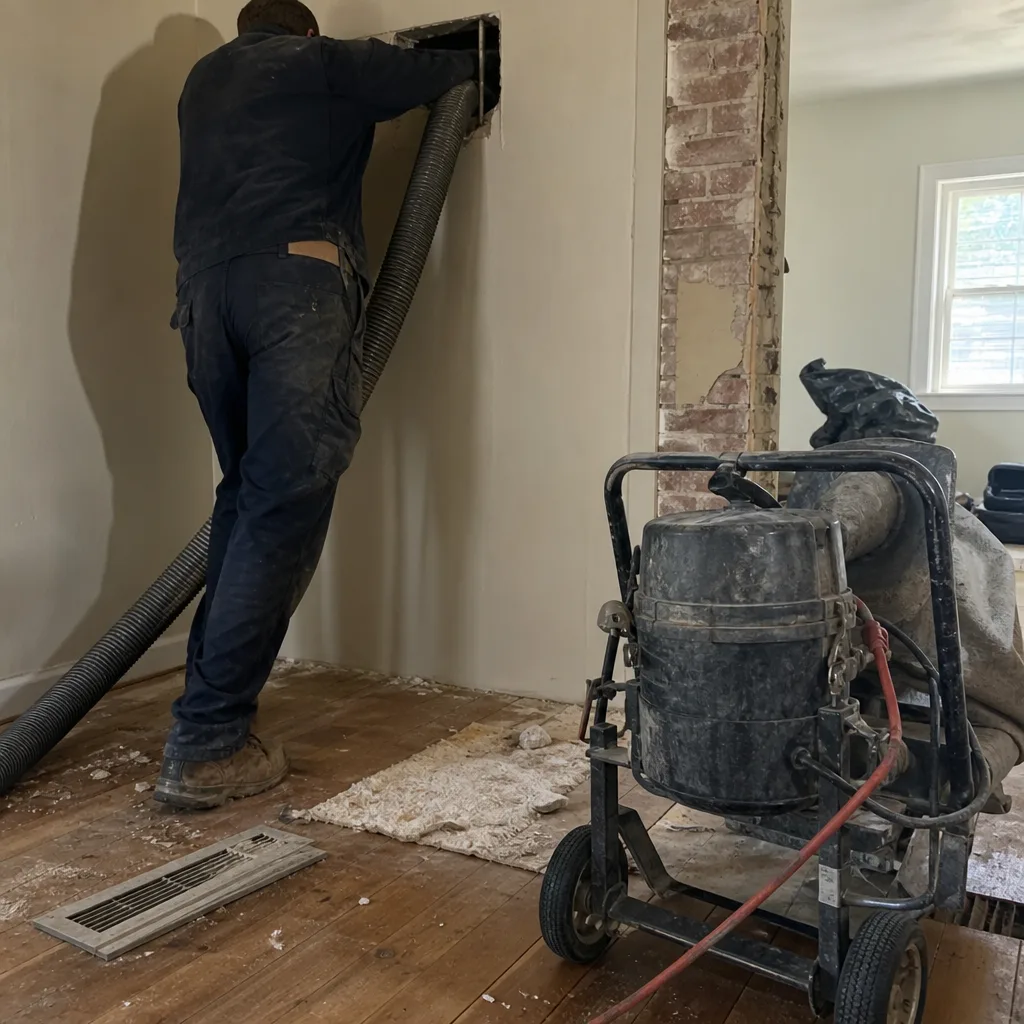 Before
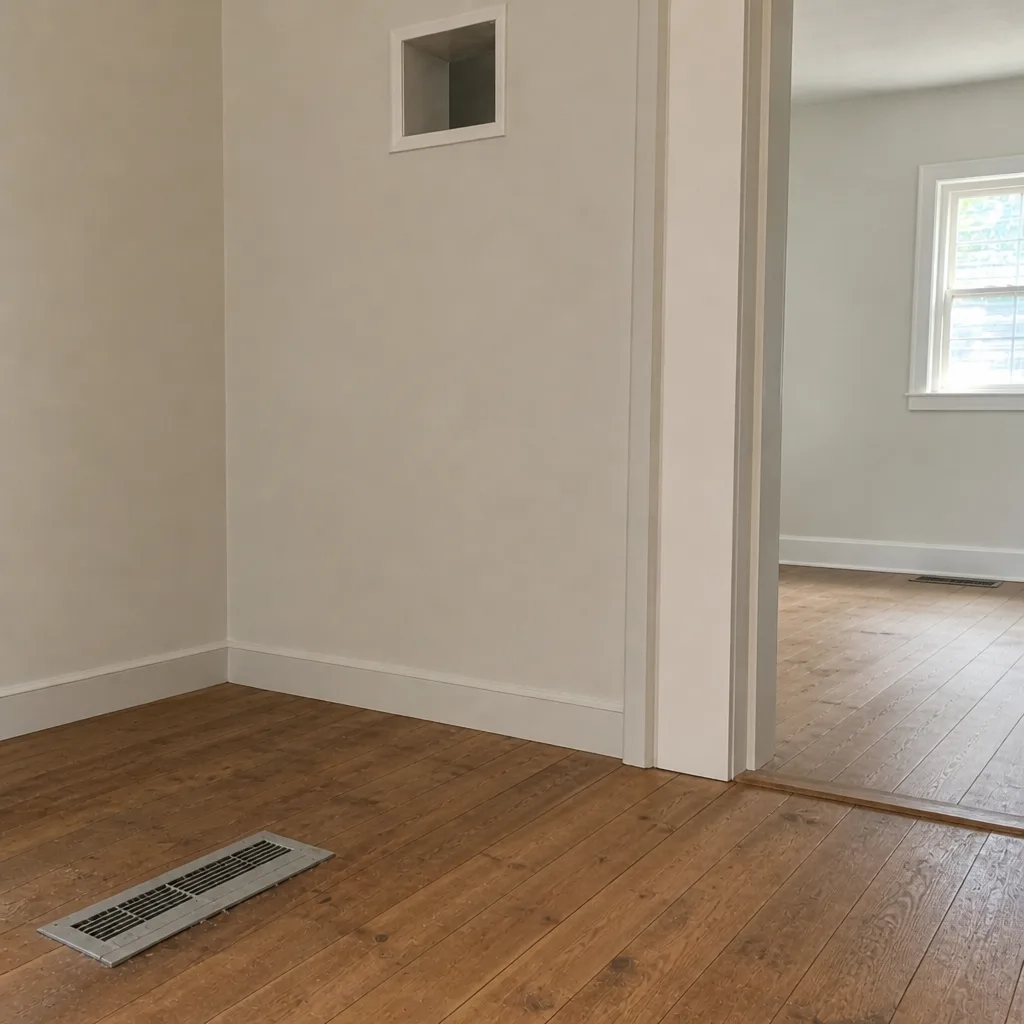 After
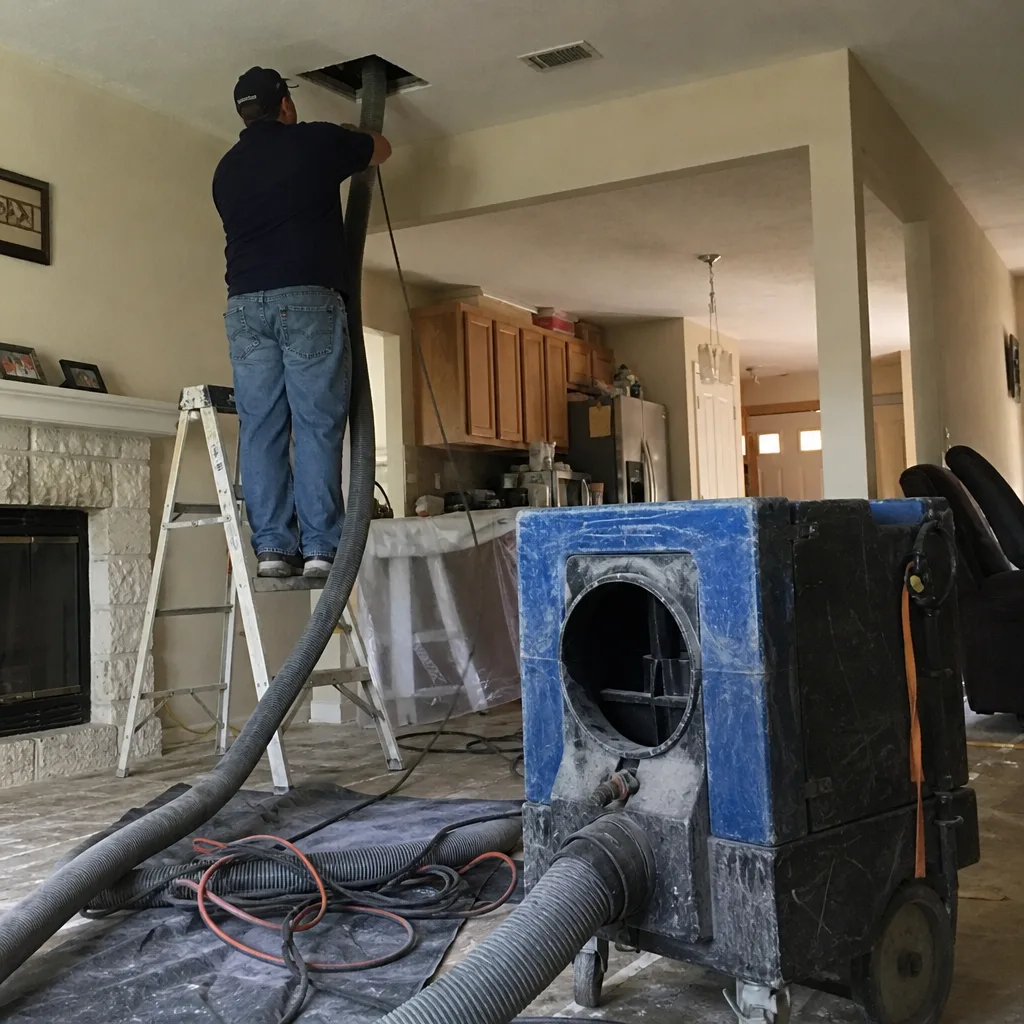 Before
 After
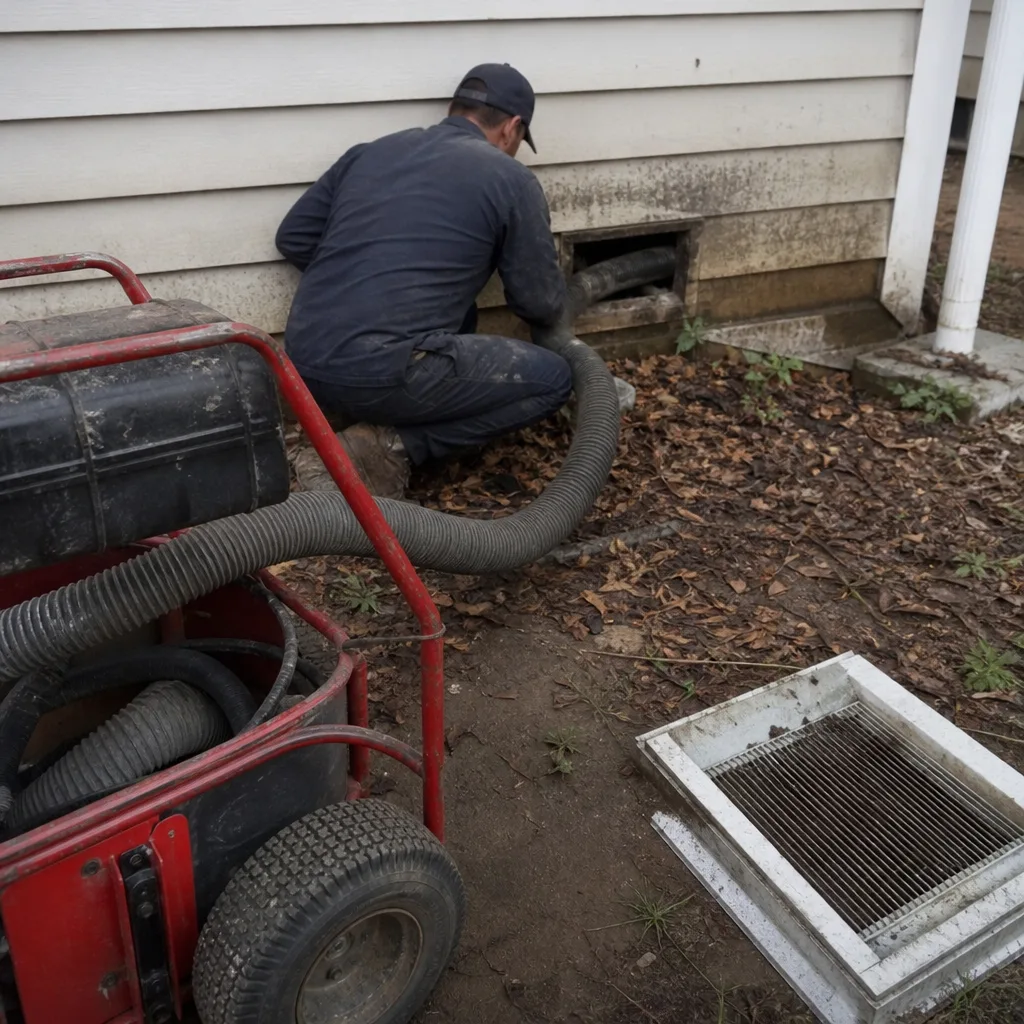 Before
 After
When to Call a Professional
Some duct conditions are obvious enough that you’ll notice them yourself. A run that’s visibly disconnected in the attic, a vent blowing noticeably less air than the others, a dryer that takes much longer to dry a load than it used to, a musty smell when the AC runs. Any of those is a signal to have the system looked at, not to guess at the cause. Duct cleaning and repair in Waco have to be done with the right equipment, and the right equipment determines whether the job is done at all. Duct Cleaning Waco offers free estimates in Waco. Call (855) 745-6206. We answer 24/7. Fast dispatch from 7am to 7pm, Sunday through Friday.
Frequently Asked Questions
No. Air duct cleaning alone doesn’t require a permit in Waco or anywhere in Texas, because cleaning doesn’t modify the mechanical system. Permits apply to repair and replacement work that changes the ducts or the equipment. If you’re having cleaning done and the technician finds damage, that’s when the permit question comes up.
Cleaning removes contaminants from existing ducts without modifying them; repair changes the system’s configuration or replaces components. Texas mechanical code treats duct systems as part of the mechanical system, so modification of the ducts generally requires a permit. Cleaning doesn’t. The gray zone is work like reconnecting a duct during cleaning, which can be either depending on scope. Ask before the work starts.
It depends on scope. Sealing a single existing joint with mastic or metal tape is usually treated as maintenance. Sealing a full duct run, reworking a plenum connection, or replacing a disconnected section can be treated as repair, which typically requires a permit. Attic duct sealing in Waco is common because attic ducts take the most wear, so it’s worth asking how the scope will be classified before work begins.
Ask for the company’s Texas HVAC contractor license and confirm it’s active with the Texas Department of Licensing and Regulation. Cleaning-only companies don’t need an HVAC license; companies doing duct repair do. A professional will share the license and put the license number on the invoice, and will pull permits when the work requires them.
Keep a written invoice with the scope, before-and-after photos, notes on any defects found, and the equipment used. If a technician reconnects or modifies anything during cleaning, ask for that in writing too. The record is what protects you at resale, at insurance, and at a home inspection.
It can stall a sale or reduce the price through a repair credit. Home inspectors flag visible duct modifications that have no permit trail, and buyers use them as negotiating points. The fix isn’t retro-permitting every prior modification; it’s getting a documented cleaning and inspection of the system as it stands.
The Bottom Line
Duct cleaning doesn’t need a permit. Duct repair usually does. The line between them is a real one, and homeowners who understand it avoid the resale headaches that come from undocumented HVAC work. In Waco, mechanical permits go through the City of Waco’s development services department, and only a licensed HVAC contractor can pull one. Even when no permit applies, document the job: invoice, photos, defects, equipment. Keep it on file. And when you’re ready to have the system looked at, choose a company that can answer the permit question without hesitation. Free estimates. Call (855) 745-6206. We answer 24/7. Fast dispatch from 7am to 7pm, Sunday through Friday.
Written by the team at Duct Cleaning Waco.