
Last updated November 15, 2026
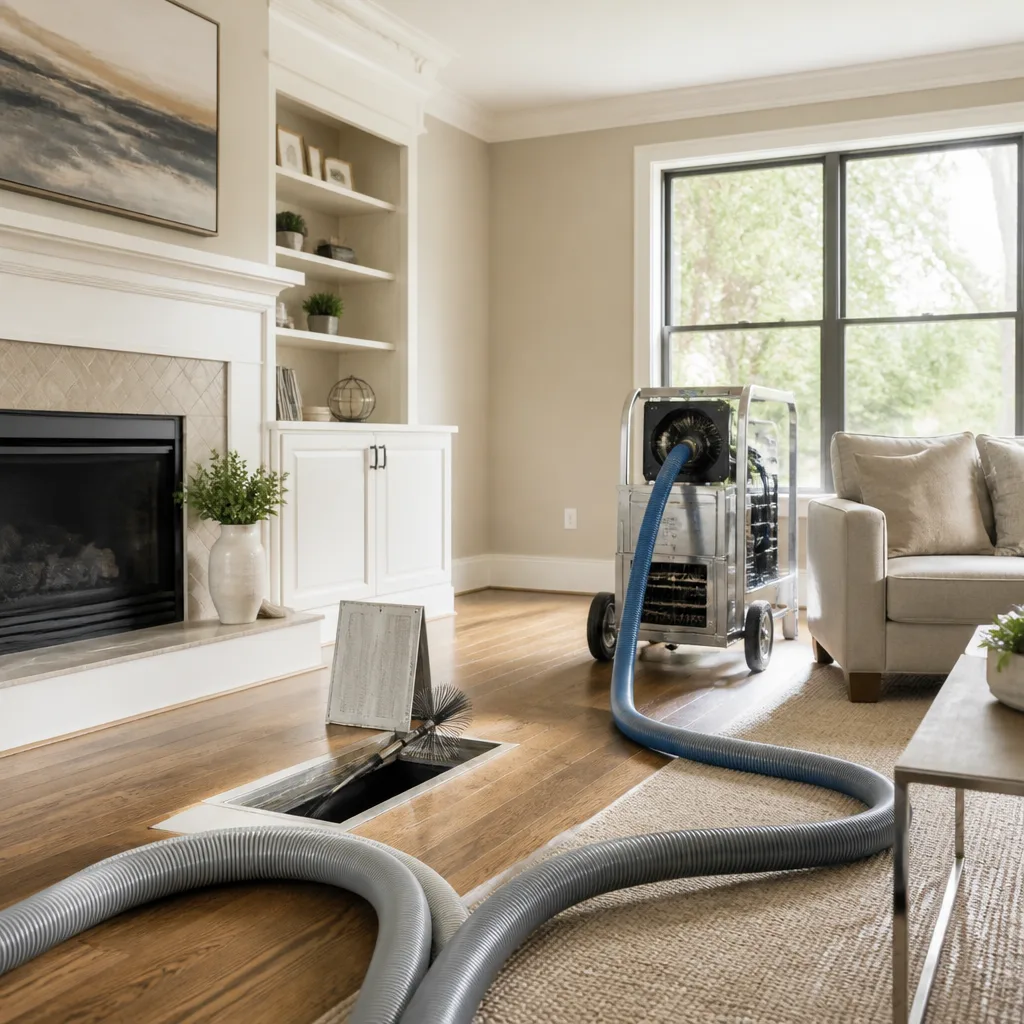 Whole-home duct cleaning
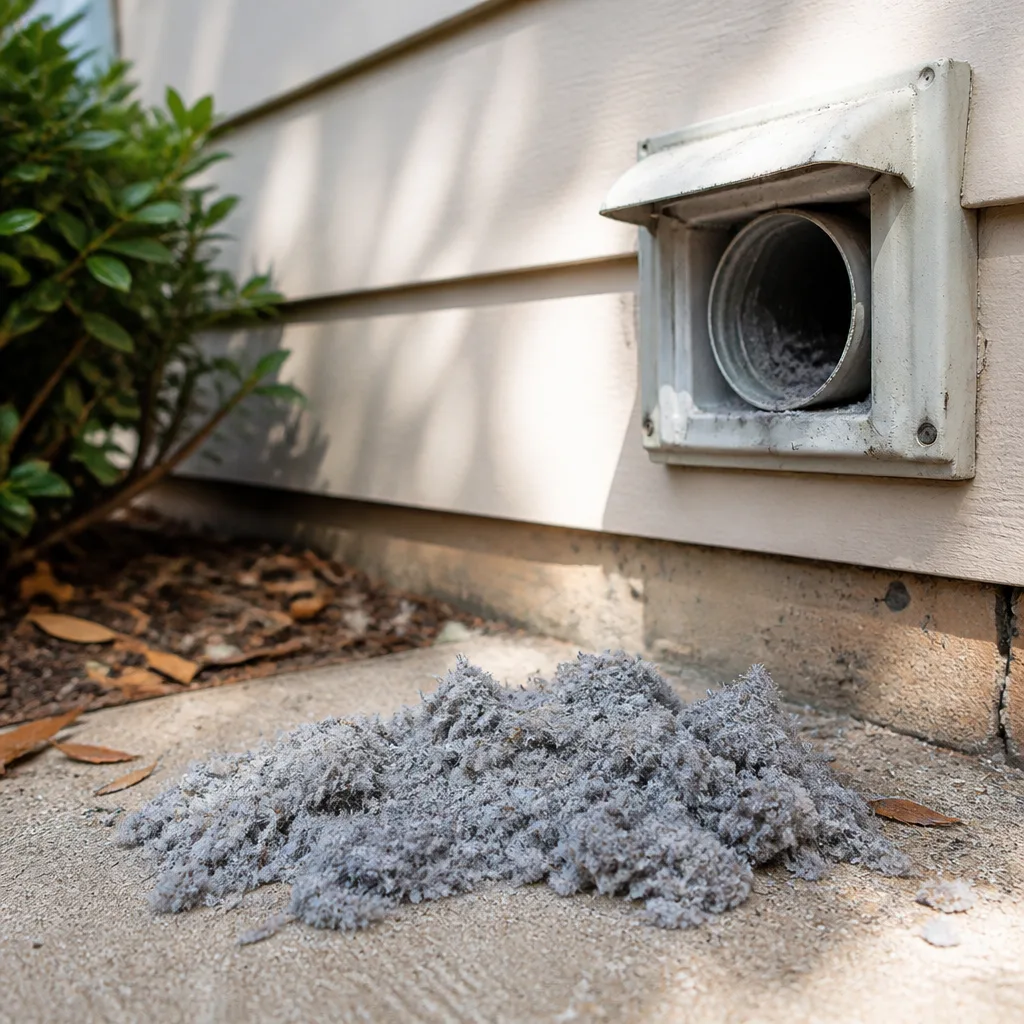 Dryer vent cleaning
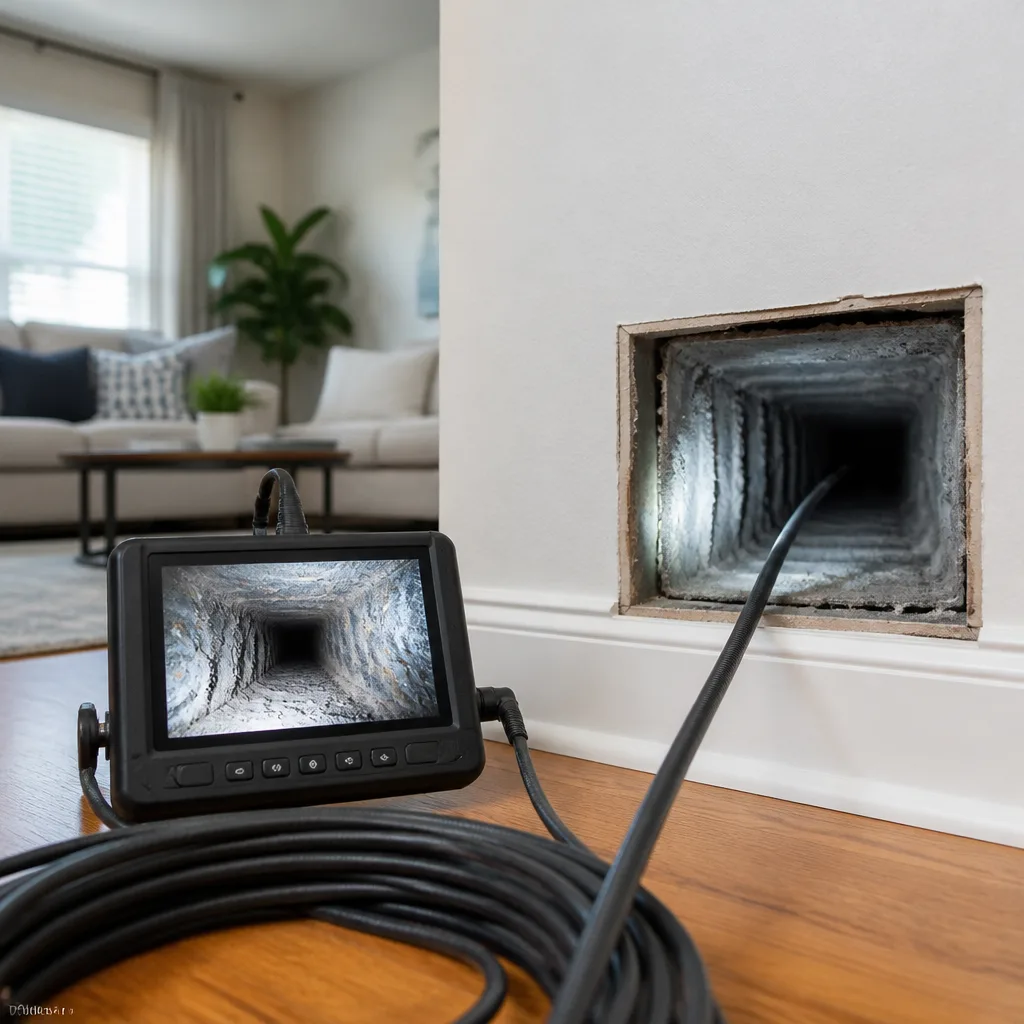 Camera inspection
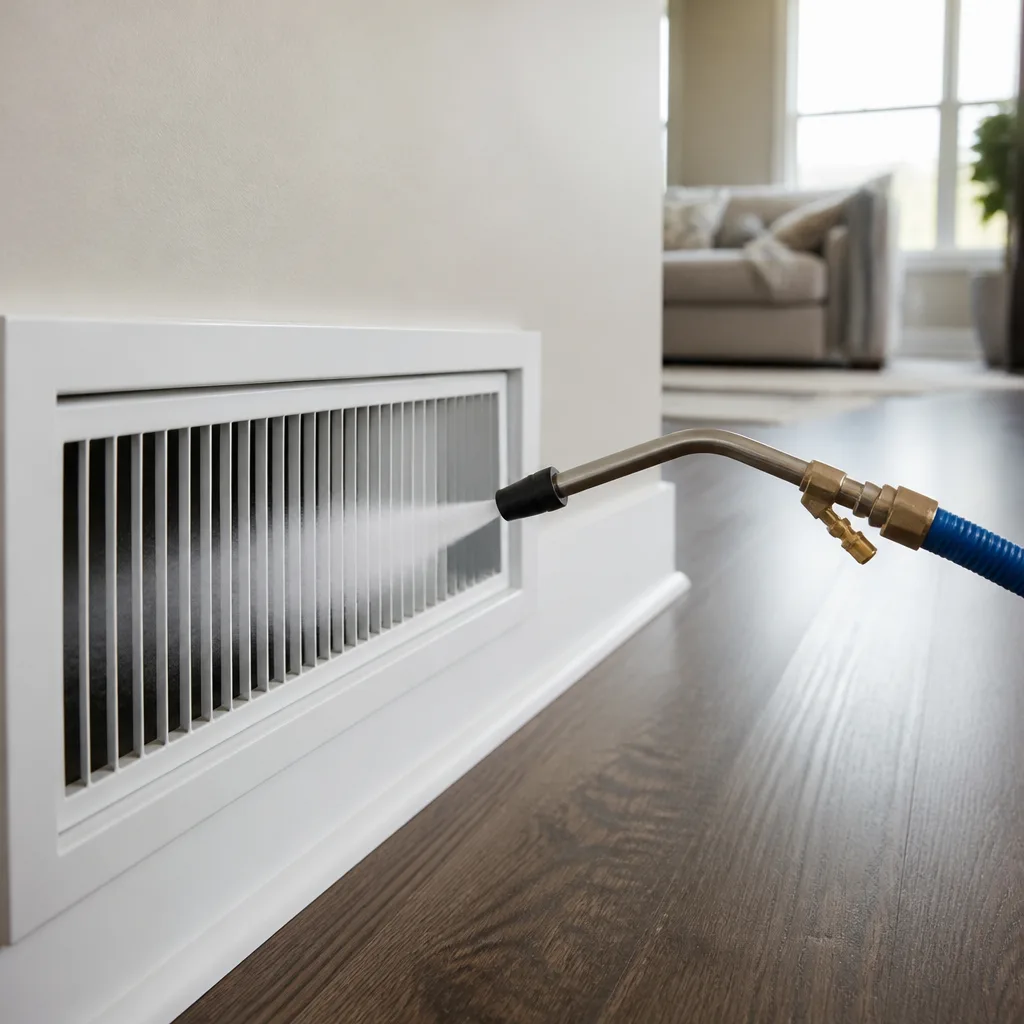 Sanitizing & deodorizing
Whole-system duct and dryer vent check with before-and-after photos - you see exactly what came out of your vents
That "$99 whole-house special" is a bait ad - the real number appears once they are in your hallway, or the "clean" is a shop-vac at the register. We photograph the inside of your ducts before and after instead.
Air Duct Cleaning Maintenance Schedule: What to Do and When
The 3-to-5-year cleaning interval you’ve read everywhere was never calibrated for a home in Waco with two dogs, a MERV-6 filter, and attic temperatures that push past 140°F through most of the summer. That number comes from national averages that lump mild climates, cold climates, and dusty desert homes into one tidy range. Your ductwork doesn’t live in an average. It lives above your ceiling in a Central Texas attic, pulling air through a filter you control, in a house where the contamination load is entirely specific to you. This guide replaces the generic interval with a schedule built from the variables that actually matter here: pet load, filter grade, renovation history, allergy sensitivity, attic condition, and how hard your system works to keep up. You’ll leave with a household contamination score, a seasonal checklist timed to Waco’s pollen and cooling seasons, and a professional inspection standard you can hand to any contractor so condition gets tracked over time instead of reset to zero.
Quick Answer
Most Waco homes need professional duct cleaning every 3 to 5 years, but that window shifts down to 2 years in homes with multiple pets, recent renovation dust, or allergy sufferers, and can stretch to 6 or 7 years in low-occupancy homes with high-grade filtration and clean attic conditions. The schedule that matters is the one matched to your household profile, not a national average. Filters should be checked monthly in cooling season and replaced every 60 to 90 days in most Waco homes, with one swap timed to oak pollen season in late winter and another before summer cooling demand peaks.
Styles & brands we work with
- Whole-home duct cleaning
- Dryer vent cleaning
- Camera inspection
- Sanitizing & deodorizing
Table of Contents
- Why the National 3-to-5-Year Rule Fails in Waco
- Building Your Household Contamination Score
- Your HVAC Filter as a Diagnostic Tool
- Seasonal Duct Tasks Waco Homeowners Can Do
- Dryer Vent Maintenance: The Parallel Schedule
- What a Professional Inspection Should Document
- Attic Conditions, Duct Integrity, and Repair Timing
- Sample Schedules by Household Profile
Why the National 3-to-5-Year Rule Fails in Waco
The most cited duct-cleaning interval in the country is a range, and ranges average out the extremes. National industry guidance was built by pulling data across every climate zone, housing stock, and household type in the U.S. That’s useful for a general recommendation and nearly useless for a specific home on a specific street in Waco. The variables that drive contamination rates inside your ductwork aren’t national. They’re local and personal.
Start with the attic. In Waco, an unconditioned attic can reach temperatures that stress flexible duct connections and cause sealant to fail faster than in cooler markets. When a joint opens slightly, the system pulls attic air, insulation fibers, and dust straight into the supply side. That’s not a cleaning problem you can average away; it’s a repair trigger. A duct system that leaks into a hot Central Texas attic will load up with contaminants far faster than a sealed system running in a moderate basement.
Then there’s what Waco’s air brings in. Live oaks and other trees release pollen in late winter and early spring, and that pollen gets drawn into return ducts and settles on interior surfaces. Add construction dust from the steady pace of renovation and new building across neighborhoods like Woodway, Hewitt, and the older blocks near downtown Waco, and the load rises again. Homes near active construction sites should shorten their interval, full stop.
Filter grade is the third variable. A MERV-6 filter, common in older Waco homes, catches roughly the larger particles and lets fine dust ride straight through to your coil and duct walls. A higher-MERV filter changes what deposits where. Neither grade means you never need cleaning, but the grade tells you what’s accumulating and how quickly the interior surfaces will foul. Pair a weak filter with a pet-heavy household and the national range means nothing.
It’s also worth separating two conversations that get tangled: indoor air quality and system efficiency. Duct cleaning affects both, but the schedule you follow should account for both. A home with allergy sufferers cares about what’s circulating. A home with a strained blower and high summer bills cares about airflow restriction. Same cleaning, different timing priorities. Our air duct cleaning work is built to address both by cleaning the full system rather than spot-treating visible vents.
Building Your Household Contamination Score
A household contamination score is a simple point count that adjusts your cleaning interval up or down based on the factors that actually drive how fast your ducts foul. Add the points that apply, then apply the adjustment to a base interval of four years. It takes five minutes and gives you a defensible number instead of a guess.
Start at a base interval of 4 years. Add 1 point for each factor below that applies to your home.
- One or more pets indoors. Shedding pets add dander and hair continuously. Two dogs is a heavier load than one cat; count the factor and lean toward the shorter side of your result.
- A smoker in the household. Smoke residue coats duct surfaces and doesn’t come off with a light vacuum.
- Renovation in the past 24 months. Drywall dust, sawdust, and insulation fibers migrate into returns during any significant remodeling. Count this even if the work was contained.
- An allergy or asthma sufferer in the home. The threshold for “clean enough” drops when someone’s respiratory health is in the balance.
- A filter graded MERV-8 or lower. Lower-filtration filters pass more fine particulate downstream.
- A visible dust plume from supply registers when the system starts, or dark streaking around the register frames.
- A home older than the current duct system or any home where duct history is unknown. Unknown means start clean, then track.
Now convert points to an interval adjustment:
- 0 to 2 points: stretch your interval. Clean every 5 to 6 years and rely on filter discipline.
- 3 to 4 points: keep to the base schedule of about 4 years.
- 5 to 6 points: shorten to every 2 to 3 years.
- 7 or more points: clean now, then reassess annually with a filter and register review.
The score isn’t a diagnosis. It’s a planning tool. In our experience, the homeowners who get the most out of duct cleaning are the ones who came in with a reason: pets that coat everything in hair, a remodel that left grit in the registers, a child whose allergies got worse every spring. If your score lands in the 5-plus range, that’s a signal to book a real inspection and let the findings set the schedule. For landlords managing multiple units, run the score once per unit and you’ll see quickly which buildings need attention. If you’re in the market for a first-time clean, the Duct Cleaning Waco overview walks through what the service actually involves.
Your HVAC Filter as a Diagnostic Tool
Your furnace or air handler filter is the cheapest sensor you own. It tells you what’s migrating through your duct system, and it tells you faster than any walkthrough. Learning to read it turns a chore into real diagnostic information about your home.
Pull the filter and look at three things: color, distribution, and texture. Color tells you the dominant contaminant type. Uniform gray dust is normal and expected. Gray-black buildup that looks oily points to smoke or kitchen grease. Rust or brown staining along the edges suggests moisture somewhere in the return path. Distribution tells you about airflow. A filter that’s dirty on one side and clean on the other means air is bypassing it or the filter isn’t seated properly. Heavy loading at one corner suggests a leak nearby, often at the filter rack or a return boot. Texture tells you particle size. Light, fluffy dust is larger particulate caught where it should be. Fine, almost talc-like powder means lower-grade filters are letting fine material pass, and that fine material is what settles inside your ducts and on the coil.
Here’s the calibration most homeowners miss: what your filter catches is only part of the story. The material that worries us is the fraction that gets past the filter entirely. A MERV-6 in a pet household passes a lot. That residue is what accumulates on duct walls and eventually restricts airflow or recirculates into your living space. The filter isn’t protecting your ducts from the air; it’s protecting the air from some of your ducts. Read it as evidence of what’s still moving through.
Practical check intervals for Waco homes:
- Check the filter every 30 days through cooling season, when the system runs hardest.
- Replace every 60 to 90 days in homes with typical dust loads and no pets.
- Replace every 30 to 45 days in pet households or during renovation.
- Replace immediately after any significant remodeling, regardless of when it was last changed.
Don’t chase the highest MERV rating you can find. A filter that’s too restrictive for your blower can reduce airflow and strain the system. Match the rating to what your equipment calls for, and if you’re not sure, ask before you upgrade. The right answer for your Waco home depends on the air handler, not a marketing number.
Seasonal Duct Tasks Waco Homeowners Can Do
You don’t need a truck to do the most valuable maintenance on your own system. These are the tasks worth doing on a calendar, and they take less time than you’d expect in a mild-winter market like ours.
Late winter (before oak pollen season): replace the filter and inspect the return grilles for buildup. Late winter is when live oak pollen and other tree pollen begin moving through Central Texas air, and a fresh filter gives your system the best chance of keeping that pollen from settling into your ductwork. Wipe down return grilles with a damp cloth and check that the filter is seated flush.
Early spring: walk your registers. Pull each supply grille and look at the boot, the visible inner surface just behind the register. You’re looking for dust accumulation, debris, or insulation fibers. If a boot looks heavily coated, note it. If you see actual debris like construction fragments or pest evidence, stop and call a professional rather than reaching into the duct.
Late spring (before cooling season peaks): a second filter swap, plus a visual once-over. Waco summers push systems hard, and the interval between May and September is when a dirty system becomes an expensive one. This is the best time to schedule a professional inspection if you’re due, because the cooling season is when airflow restrictions hurt most. Our Waco service page covers what gets checked on an inspection visit.
Fall: check the outdoor condenser unit and clear debris from the top of it, and re-check the filter before the heating season. Waco’s mild winters mean the heating cycle runs less than the cooling cycle, but the return path is the same, and a filter overdue from spring still loads the system.
Ongoing: vacuum the return grilles once a month during active seasons, and keep the return path clear of furniture and rugs that block airflow. A blocked return pulls harder from the rest of the house and can pull attic air in through any small leak.
And a note for anyone thinking about “cleaning the ducts” themselves with a shop-vac: don’t. A hardware-store vacuum doesn’t reach the interior surfaces of your ducts, and pushing a brush blindly through flexible duct can tear the liner or knock a joint loose, which turns a maintenance task into a repair. The right tools for the job are purpose-built, and they belong in trained hands.
Dryer Vent Maintenance: The Parallel Schedule
Dryer vent cleaning belongs on the same calendar as your duct schedule, not squeezed in whenever someone remembers. And the frame is safety, not cleanliness. Lint accumulates in dryer vents because it’s meant to be captured there, but when it builds up enough to restrict airflow, the dryer runs hotter and the lint that collects in the vent and around the dryer becomes a fire risk.
Lint accumulation rates depend on two things: the dryer type and how much you run it.
- Electric dryers with a short, straight vent run: slower accumulation, clean roughly every 18 to 24 months with heavy use.
- Gas dryers: similar load to electric, but the extra heat makes airflow restriction more consequential. Keep to the shorter end of the range.
- Long vent runs with elbows: every bend traps lint. A 25-foot run with two 90-degree turns fouls faster than a straight 10-foot run. Clean annually.
- Households running multiple loads per day (larger families, households with cloth diapers or uniforms): check annually and clean at least once a year.
- Any dryer with a clogged or missing lint screen: fix immediately, then clean the vent. A missing screen sends lint straight into the duct.
Warning signs that the vent needs cleaning now, not later: clothes taking two cycles to dry, the dryer top getting unusually hot to the touch, a burnt or musty smell, or visible lint collecting behind the dryer. Any of those means stop and get it cleared before the next load. A dryer that’s working harder than it should is a signal, not a quirk. Our dryer vent cleaning service covers the full run, not just the piece behind the machine, and it’s one of the three core services we run.
For landlords and property managers, put dryer vent cleaning on the same annual cadence as a unit turnover check. It’s a documented safety item, and a written record of when the vent was last cleared is worth having when an appliance fails or a tenant reports a problem.
What a Professional Inspection Should Document
The difference between a duct cleaning you can trust and one you can’t usually comes down to documentation. A professional inspection should leave you with a record so the next service provider can compare condition over time instead of starting from zero. Here’s what to ask for and what to expect.
- Before photos of each major run. Not just the registers. Supply trunk, return trunk, and the boot behind each grille. Photos should be taken at the same points every time so comparison is possible.
- A written summary of what was found. Debris type, quantity, and location. If a section was heavily fouled, that should be noted with where.
- A record of any structural findings. Loose joints, torn liner, disconnected sections, crushed flex duct, or gaps at the plenum. These are repair items, not cleaning items, and they should be documented separately.
- Filter grade noted. The filter that was in place during the inspection and its MERV rating. This becomes the baseline for future comparison.
- After photos at the same points. Cleaned ductwork, photographed the same way. This is how you verify the work actually happened.
- Equipment and method used. A serious provider will tell you what equipment was run. Rotobrush rotary brush-and-vacuum systems and Nikro equipment are engineered specifically for duct interiors, and Abatement Technologies filtration gear is designed for contaminant removal rather than dust displacement. Ask what’s on the truck before the job, not after.
- A recommended next-review date based on what was found, not a generic number.
This documentation is why we photograph the work. It’s also why we offer a flat price per system agreed before work starts, with no per-vent pricing: you know what’s being done, you know what it costs, and the photos show the result.
Attic Conditions, Duct Integrity, and Repair Timing
In Waco, duct integrity is an attic conversation. The ductwork running through an unconditioned attic is exposed to extreme summer heat and a housing stock where flexible duct and older rigid systems are both common. When a connection loosens, air pulls from the attic rather than the living space, which means insulation fibers and dust enter the supply stream. No amount of cleaning fixes a duct that’s open to the attic; the cleaning will simply be undone by the leak.
Repair timing therefore sits upstream of cleaning timing. If an inspection finds a disconnected section, a crushed span, or a torn liner, the repair comes first. Cleaning a compromised system wastes the job. This is why air duct repair is a standalone service for us rather than something we clean around: there’s no point cleaning a system that’s going to re-contaminate itself through a gap. A sealed system holds a clean longer, cools more efficiently, and stops pulling attic air.
Watch for these signals that repair may be due before another cleaning:
- Higher dust levels in the house right after a cleaning
- Uneven cooling between rooms, with one side consistently warmer
- Whistling or a rush of air at register edges
- Visible sagging or disconnected flex duct in the attic
- Rising energy bills with no other explanation
Combine an attic-condition check with your pre-summer inspection. It’s the season when a leak costs the most, and it’s the one time of year when a loose joint in an attic matters enough to bother fixing before the next cooling bill arrives.
Sample Schedules by Household Profile
Here’s how the contamination score translates into real calendars. Fit yourself to the closest profile and adjust for any factor you score higher than the template.
The low-load home: two adults, no pets, no recent renovation, MERV-11 filter, well-sealed attic ductwork. Clean every 5 to 6 years. Change the filter every 90 days, twice a year in the Waco cooling season plus one pre-winter. Inspect registers annually yourself. Dryer vent clean every 2 years with a modest laundry load.
The typical family home: two adults, one or two kids, one pet, MERV-8 filter, occasional small renovation. Clean every 3 to 4 years. Filter every 60 days through summer, 90 days in the cooler months. Inspect boots before the summer season. Dryer vent annual if the dryer runs most days.
The high-load home: multiple pets, a family member with allergies, recent renovation, or a MERV-6 filter with a dust plume from the registers. Clean now, then every 2 years. Filter monthly through cooling season and inspect the boot behind each supply at every change. Repair check before each cleaning, because a high-load home re-contaminates faster and a leak wastes the clean. Dryer vent every 12 months.
Landlord and property manager: run the score once per unit at turnover. High-load units on a 2-year cycle, low-load on 5 years. Document everything, because you’ll want the record when a tenant raises an air quality concern or an appliance is replaced. A written inspection baseline is what lets the next vendor compare rather than restart.
Common Mistakes to Avoid
- Following the national 3-to-5-year number without adjustment. It wasn’t built for your house, your pets, or Waco’s attic. Use the contamination score and adjust.
- Skipping the filter between cleanings. A cleaned duct with a clogged filter re-contaminates faster than one that was never cleaned, because the clean surface has nothing catching the load. Stay on the filter schedule.
- Cleaning before checking for leaks. If a joint or liner is compromised, the cleaning gets undone by attic air within a season. Have integrity checked first.
- Treating the dryer vent as a chore for “one of these days.” Lint buildup is a fire risk, and the fix is a single visit. Don’t put it behind the duct cleaning on the priority list.
- Hiring anyone with a shop-vac and a hose. Consumer-grade vacuums can’t reach interior duct surfaces and can dislodge debris into the system. Ask what equipment the provider uses before booking.
- Believing a “flat-rate per vent” quote. A price quoted per vent rarely tells you the whole-system cost. A flat price per system, agreed before work starts, is the number that matters.
- Not keeping the inspection record. A cleaning without documentation leaves the next provider starting from zero, which usually means being told the ducts need cleaning right away, regardless of condition.
See the difference
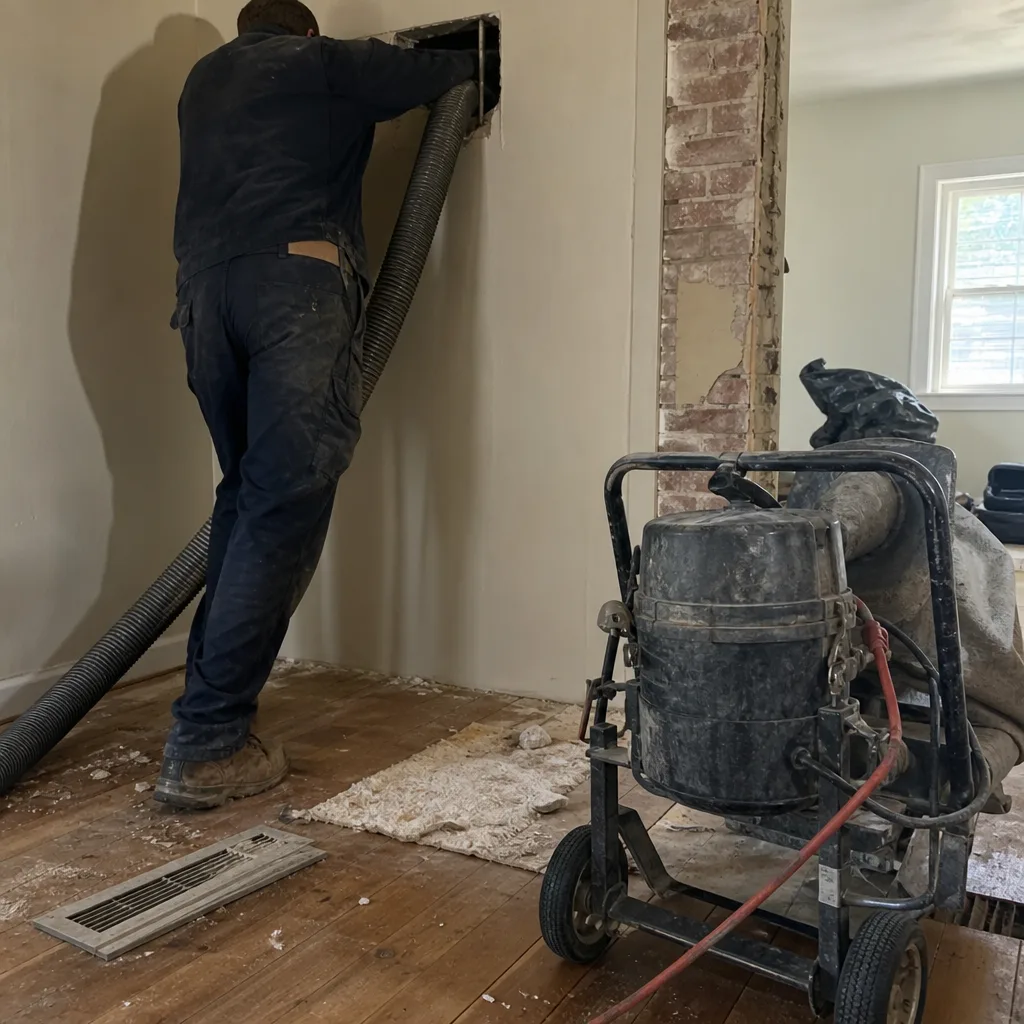 Before
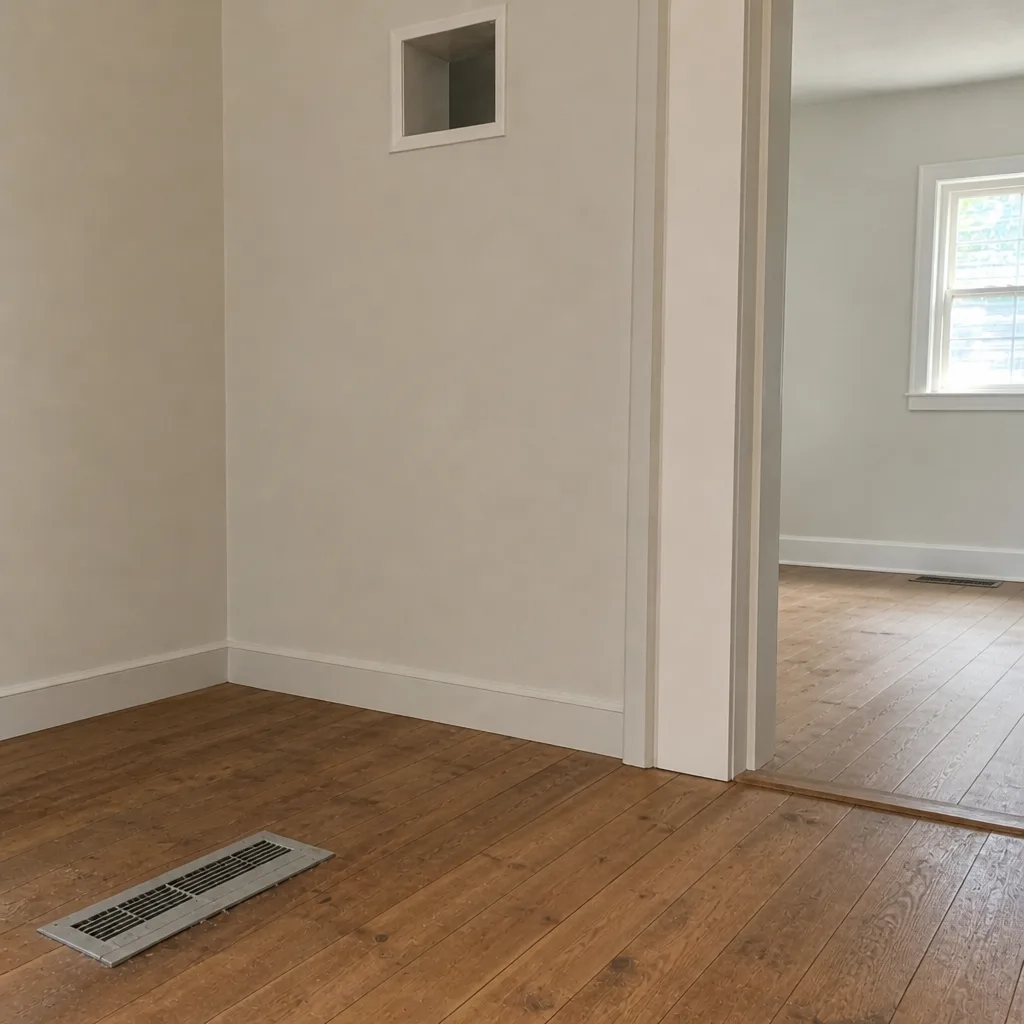 After
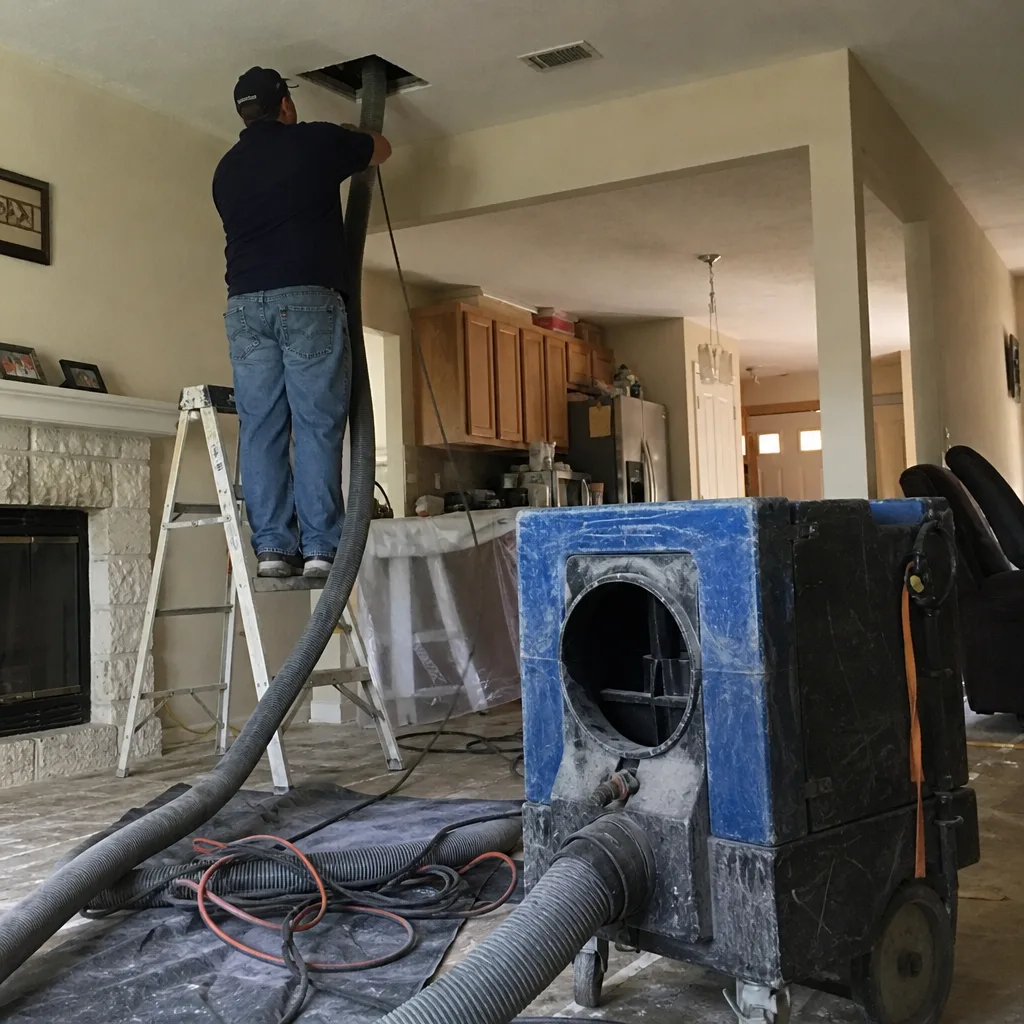 Before
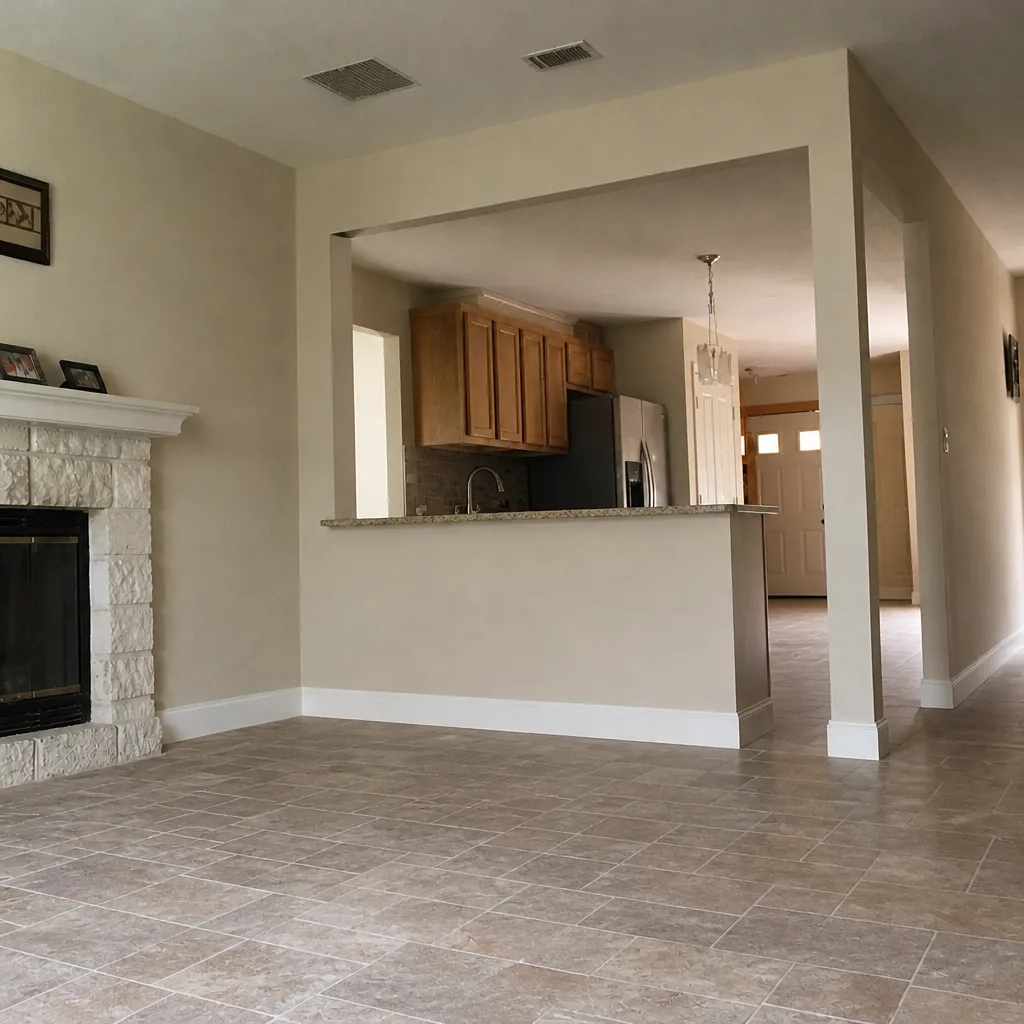 After
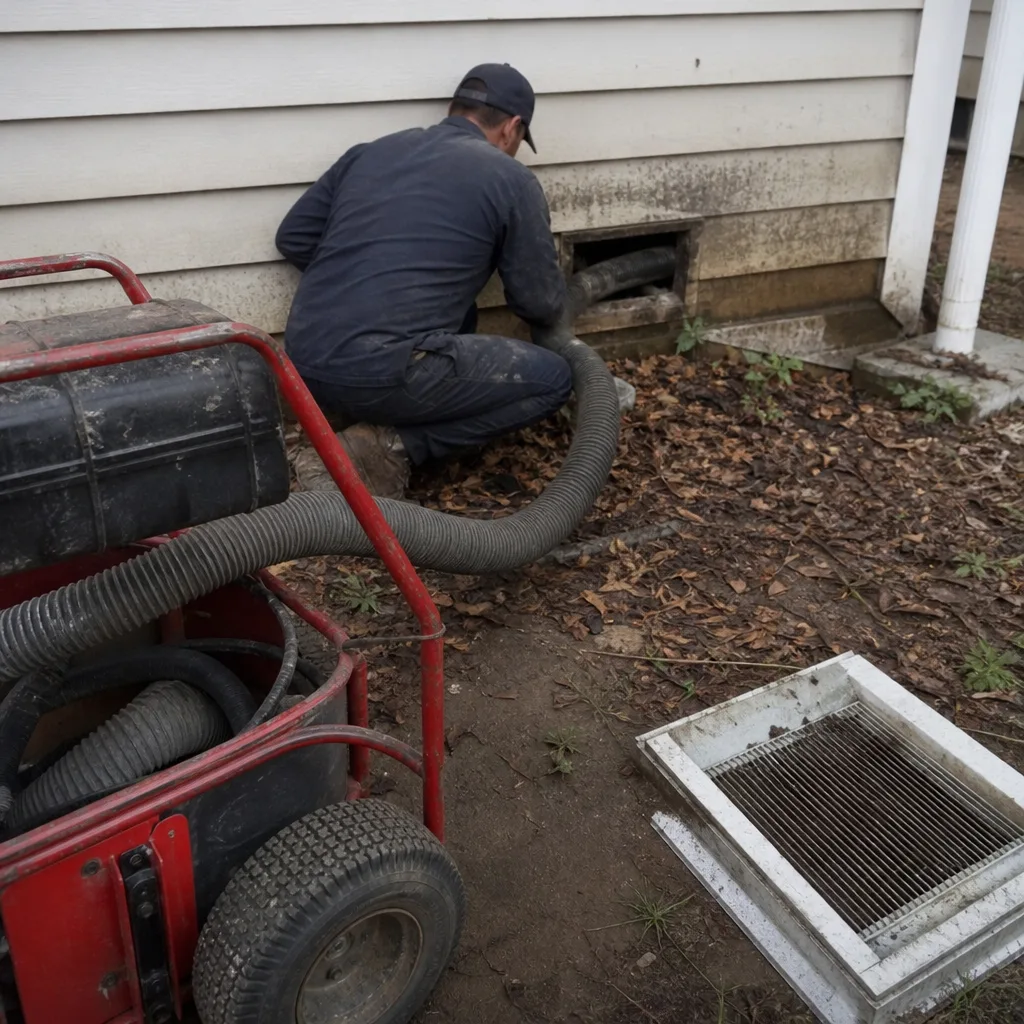 Before
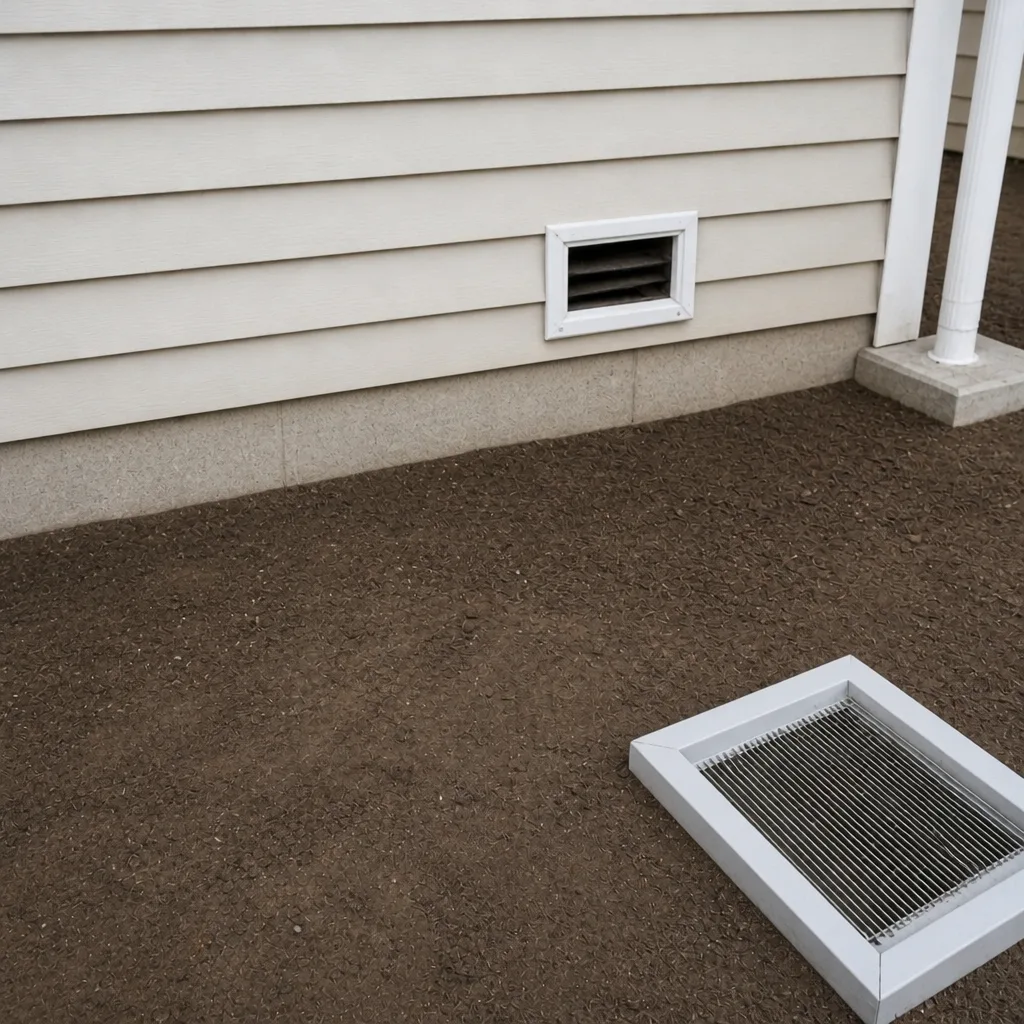 After
When to Call a Professional
Call a professional when your contamination score lands at 5 or higher and points to a cleaning, when you see a dust plume or dark streaking at registers, or when one room cools noticeably worse than the rest. Call when renovation dust has entered the system, when an allergy sufferer’s symptoms track with the cooling season, or when the system has never been cleaned and the duct history is unknown. Call if any attic duct looks sagging, disconnected, or torn. Call annually for the dryer vent if the dryer runs daily, or anytime clothes take two cycles and the dryer top gets hot. We handle the full job in Waco: duct cleaning, duct repair, and dryer vent cleaning. Call Duct Cleaning Waco at (855) 745-6206 for a free estimate. We answer 24/7. Fast dispatch from 7am to 7pm, Sunday through Friday.
Frequently Asked Questions
Most Waco homes need duct cleaning every 3 to 5 years, with shorter intervals for pet households, recent renovations, allergy sufferers, and homes with low-MERV filters. Homes with a high contamination score should clean every 2 years. Call (855) 745-6206 for an exact quote; estimates are free.
The price is set per job by a written estimate after we see the system, because whole-system size and condition vary widely. We quote one flat price per system rather than a per-vent rate, and it’s agreed before any work starts. Call (855) 745-6206 for an exact quote; estimates are free.
Cheap quotes usually mean a smaller scope, a consumer-grade vacuum instead of purpose-built equipment, or a per-vent price that grows once the technician is on site. A flat price per system with documented before-and-after photos is the number to compare. Call (855) 745-6206 for an exact quote; estimates are free.
Ask for before-and-after photos of the same points on each major run, plus a written summary of what was found and where. A serious provider documents the work because the system needs to be tracked over time, not reset to zero. Call (855) 745-6206 for an exact quote; estimates are free.
Partly. A higher-MERV filter matched to your system captures more particulate before it reaches the ducts, which can stretch the interval toward the longer end for low-load homes. It doesn’t replace cleaning, because fine material still gets through and accumulates on duct surfaces over time. Call (855) 745-6206 for an exact quote; estimates are free.
Dryer vents should be cleaned every 12 to 24 months depending on dryer type, vent length, and load, and every year for households running multiple loads a day. It’s a separate fire-safety item from indoor air quality, and it shouldn’t ride on the duct cleaning schedule. Call (855) 745-6206 for an exact quote; estimates are free.
The Bottom Line
A light schedule isn’t lazy; it’s informed. Use the household contamination score to set your interval, read your filter as a diagnostic rather than a chore, check boots before the summer cooling season, put the dryer vent on its own annual-or-biennial cadence, and demand documentation so condition gets tracked over time. Those five habits do more for your air quality and your system’s efficiency than any quoted average. When the score says clean, or when repairs surface first, call Duct Cleaning Waco at (855) 745-6206 for a free estimate. We answer 24/7. Fast dispatch from 7am to 7pm, Sunday through Friday. Breathe the difference, with the right tools and a full record of the work.
Written by the team at Duct Cleaning Waco.